I looked into converting a diesel reefer trailer to electric last year for a small fleet operator in Northern California. The math looked brutal at first. Then I found the retrofit kits that don't require buying a whole new trailer.
If you want to convert diesel reefer to electric, you have two real paths. One is a plug-in hybrid retrofit that keeps your existing diesel engine as backup. The other is a full battery-electric replacement.
The first is cheaper and faster. The second is cleaner but demands infrastructure most yards don't have. Here's what actually works, based on the products on the market and the real cost numbers.
How to Convert Diesel Reefer to Electric in 2026?
The Retrofit That Makes Sense for Most Fleets
Carrier Transicold sells a system called [R]eCool. It converts diesel-powered Vector refrigeration units on semi-trailers into hybrid or fully electric operation . This is the option I'd recommend for anyone testing the waters.
Read Also: Mercedes-Benz CLA EV India Launch Date Confirmed: 792km Range & 20-Min Fast Charging!
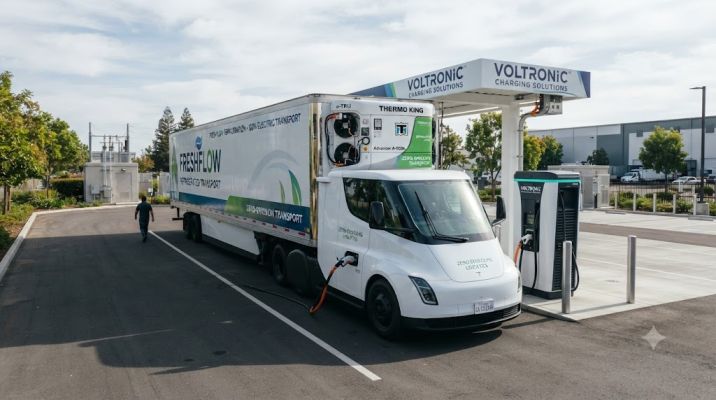
Here's why it works. The system uses an under-chassis battery to power the refrigeration unit during transit. You charge it through a standard three-phase standby socket when parked. The diesel engine stays as a backup. If the battery runs low, the engine kicks in. You never lose temperature control.
Installation takes under a day. No chassis modifications. That matters. Most fleets can't afford to lose a trailer for a week.
The battery pack has a lifespan of over 12 years. It's certified to R100 high-voltage safety standards. A real-world test on a Gray & Adams demonstrator trailer showed a full recharge in just over two hours using a standard 32-amp socket.
The catch: [R]eCool is built for Carrier Vector units. If your trailer runs a Thermo King or another brand, this specific kit won't fit. You'll need to check with your reefer manufacturer for a comparable retrofit.
The Cost Numbers (They're Better Than You Think)
CARB published a breakdown of diesel-to-electric trailer conversions. Here's the honest math.
A conventional diesel trailer TRU costs $20,000 to $30,000 upfront. Fuel runs about $6,400 per year at 2,000 operating hours and $4 per gallon. Maintenance adds roughly $1,700 annually.
A conversion kit costs $10,000 to $13,000. That's the retrofit hardware, not a new trailer. Maintenance drops to about $390 per year. Fuel and energy costs fall by 40% to 70%. You also need charging infrastructure: roughly $6,000 per loading dock space.
The payback isn't instant. But if you're running 2,000 hours a year, the fuel savings alone add up fast. ESL, a shore power company, reported 60-65% diesel savings in Northern California and a payback period of 1 to 1.5 years for their plug-in systems.
One caveat: those numbers assume you have shore power available where the trailer parks. If you don't, add the infrastructure cost.
The Full Electric Option (And Why Most Fleets Should Wait)
Carrier also makes the Vector 8200. It's an engineless TRU that runs entirely on grid or external power. No diesel. No hybrid backup.
You Must Also Like: Are Electric Cars as Safe as Gas Cars
This is the cleaner solution. It's also the one that requires the most planning. The Vector 8200 is designed for trailers used as stationary cold storage. It draws electricity from the grid or an external source.
If you need to move the trailer, you need either a charging stop or an electric tractor with a power converter.
There's also the eCool-Drive. It converts high-voltage DC from an electric tractor's battery into AC for the refrigeration unit. That lets any refrigerated trailer run off a 100% electric tractor. If you're already moving toward electric trucks, this closes the loop.
For a small fleet with diesel tractors and no charging infrastructure, full electric is a future play. The retrofit hybrid is a today play.
What the Regulations Are Pushing?
If you operate in California, the rules matter. CARB's TRU regulations are tightening. Zero-emission TRU technologies are exempt from certain requirements, and funding programs exist to offset costs.
The Clean Off-Road Equipment Voucher Incentive Project offers vouchers for zero-emission equipment, including TRUs. Low Carbon Fuel Standard credits can offset facility upgrade costs.
Many California utilities offer incentives for transportation electrification, including TRUs. My advice: check your state's incentives before you buy anything. A $10,000 retrofit might cost $6,000 after vouchers. That changes the payback math.
The Battery Question Nobody Answers Well
Battery life is the biggest unknown. Carrier says the [R]eCool pack lasts over 12 years. That's a long time in trailer years. But batteries degrade. Cold weather hurts range. Hot weather hurts lifespan.
The system uses Addvolt power electronics, which Carrier acquired. The battery chemistry isn't public. What matters is the warranty and the backup. [R]eCool keeps the diesel engine as a fallback.
If the battery fails, you still deliver the load. That safety net is why I'd choose hybrid over full electric for a first conversion. Foregger Energy Solutions is developing a different retrofit. Their TRUE system uses regenerative braking and battery storage to cut diesel use by up to 100%.
It installs during routine annual maintenance and operates independently of external power. That's promising for fleets without shore power. But it's earlier-stage. I haven't seen independent validation yet.
The Final Thoughts
Start with one trailer. Don't convert your whole fleet based on a spec sheet.
Pick a route with predictable stops and access to shore power at the depot. Install [R]eCool or a comparable retrofit. Run it for three months. Track fuel consumption, maintenance costs, and driver feedback. Then decide.
The technology works. The economics work in the right application. But "right application" is specific. A long-haul fleet with no charging infrastructure isn't ready. An urban delivery fleet with a home base that can install a charging pedestal is.
If you're in California, stack the incentives first. The voucher and utility rebate programs exist for exactly this reason. Use them.
The diesel reefer isn't dead. But it's on notice. And the retrofit path means you don't have to scrap a $30,000 trailer to join the transition.