Fast charging EV battery health remains the biggest worry for new buyers. I get it. You spend ₹20 lakh on an electric car, then hear horror stories about batteries dying in three years.
The truth sits somewhere in the middle. Recent data from Geotab, which tracked 22,700 EVs across 21 models, shows fast charging does speed up battery ageing—but only if you rely on it constantly.
The key word is constantly. Here's what actually matters.
The Real Data on Fast Charging and Battery Life
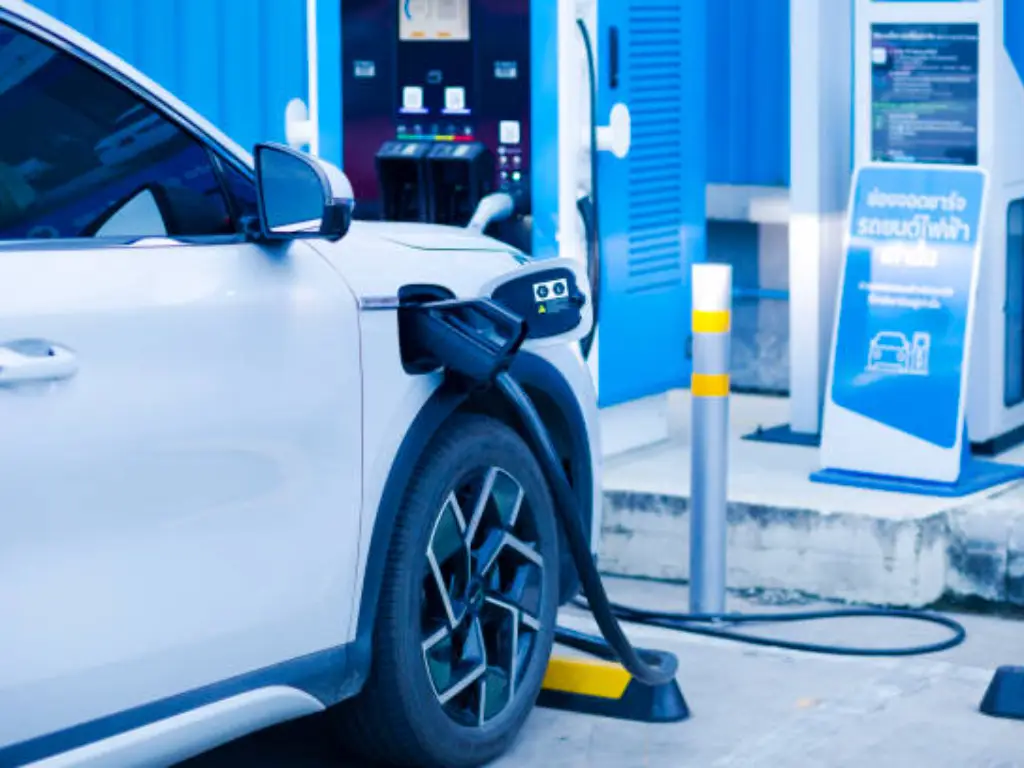
Geotab's 2026 study found something important. EVs that mostly used AC charging at home degraded about 1.5% per year. Cars that heavily used DC fast charging above 100 kW degraded at 3% per year. That's double the rate.
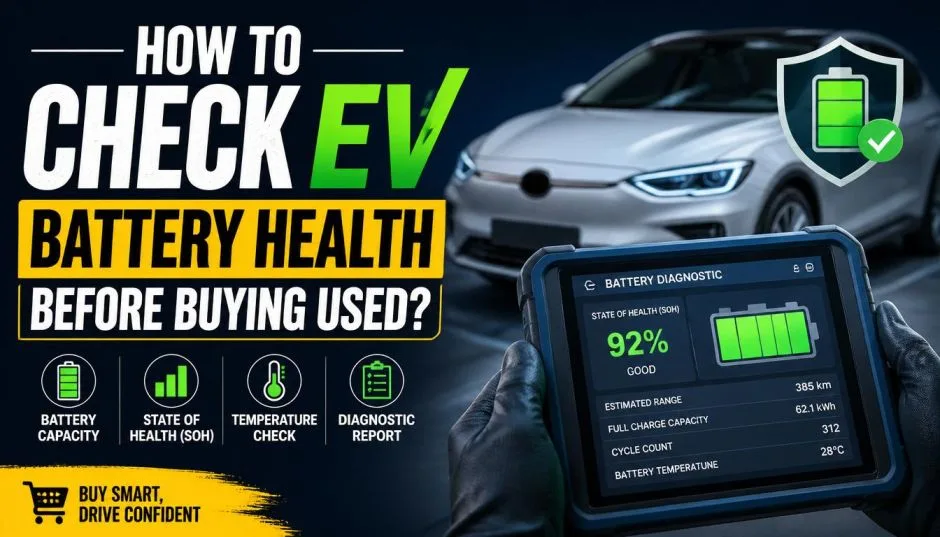
Read Also: How to Check EV Battery Health Before Buying Used?
Sounds scary. But read the fine print.
The study defined "heavy use" as more than 40% of charging sessions exceeding 100 kW. Most private owners don't come close to that. If you charge at home nightly and hit a fast charger twice a month, you're nowhere near the danger zone.
The threshold matters. Geotab found degradation accelerates noticeably when fast charging crosses 12% of total sessions. Below that, the impact stays modest.
Why Fast Charging Stresses Batteries?
Here's the simple version. Pushing electrons into a battery at high speed generates heat. Heat accelerates chemical side reactions inside the cell.
CATL's CTO explained it well. Battery temperature rising by 10°C roughly doubles the rate of internal side reactions. Those reactions eat into usable capacity over time.
The technical term is lithium plating. Instead of lithium ions sliding smoothly between electrodes, some get stuck as metallic lithium on the anode. That reduces the battery's ability to hold charge.
Battery management systems fight this constantly. They monitor temperature, balance cells, and throttle charging speed when things get hot. That's why your EV slows down after 80%.
Not All Batteries React the Same Way
This surprised me. Carnegie Mellon researchers tested three battery types under heavy fast charging.
You Must Also Like: EV Charging Costs Explained: Home vs Public Charging
LFP (lithium iron phosphate): Barely any extra degradation. Even at 90% fast charging, capacity loss stayed close to normal.
NMC (nickel manganese cobalt): Mostly fine. Slight extra degradation only at extreme fast charging levels.
NCA (nickel cobalt aluminum): The most vulnerable. Degradation scaled up sharply with more fast charging.
LFP batteries handle fast charging better. That's why CATL pushes its Shenxing LFP battery hard. Their third-generation version claims 10% to 80% in under 4 minutes. They also claim over 90% health after 1,000 fast-charge cycles.
CATL's approach targets the heat problem directly. They cut internal resistance to 0.25 milliohms—half the industry average. Lower resistance means less heat. Less heat means slower ageing.
CATL's Fast Charging Claims: Real or Marketing?
CATL announced its Shenxing Gen 3 battery in April 2026. The numbers look wild.
10% to 35% in 1 minute. 10% to 80% in 3 minutes 44 seconds. 10% to 98% in 6 minutes 27 seconds.
Even at -30°C, they claim 20% to 98% in 9 minutes. That's cold weather performance nobody else matches.
Should you believe it? Partly.
These figures come from controlled testing. Real cars, real chargers, and real conditions add variables. CATL also hasn't confirmed which production cars will get this battery first.
But the cycle life claim matters more. CATL says the battery holds above 90% health after 1,000 complete cycles. If true, that addresses the biggest fear directly.
BMW's battery production boss expressed skepticism. He warned that optimizing for one metric often compromises others like cost, safety, or energy density. That's a fair point. Time will tell.
How to Protect Your Battery Without Babying It?
You don't need to avoid fast charging entirely. The convenience is real, especially on road trips. Just be smart about it.
Charge to 80%, not 100%. The last 20% is the hardest on batteries. It generates the most heat. If you don't need full range, stop at 80%.
Don't fast charge below 20% or above 80% habitually. The middle range is gentler. Living at the extremes wears batteries faster.
Skip fast charging when the battery is hot. If you just drove hard on a highway, the pack is already warm. Let it cool or charge slower.
Use AC charging as your default. Home charging overnight is the gold standard. Fast charging is a tool, not a lifestyle.
In cold weather, precondition. Most modern EVs warm the battery before fast charging. This prevents the permanent damage that can occur when forcing current into a frozen pack.
The Practical Math for Indian Drivers
Most Indian EV owners drive 40-60 km daily. That's easily covered by overnight AC charging.
Fast charging becomes relevant for weekend trips or longer commutes. Using it once or twice a month puts you well below the 12% threshold where degradation accelerates.
If you drive for a ride-share service or cover 150+ km daily, your situation differs. You'll fast charge more. That's where battery chemistry matters most. LFP packs handle this better.
When buying used, ask about charging history. A high-mileage car that mostly slow-charged can have a healthier battery than a low-mileage car that was fast-charged constantly.
The Final Thoughts
Fast charging doesn't kill batteries. Constant fast charging speeds up ageing. For most drivers, the impact stays small. The technology keeps improving.
CATL's latest cells show that fast charging and long life can coexist—at least in lab conditions. Real-world confirmation will take a few more years.
If you want the safest bet, pick a car with an LFP battery. Charge at home. Use fast chargers when you need them, not as a habit. Your battery will outlast your ownership.