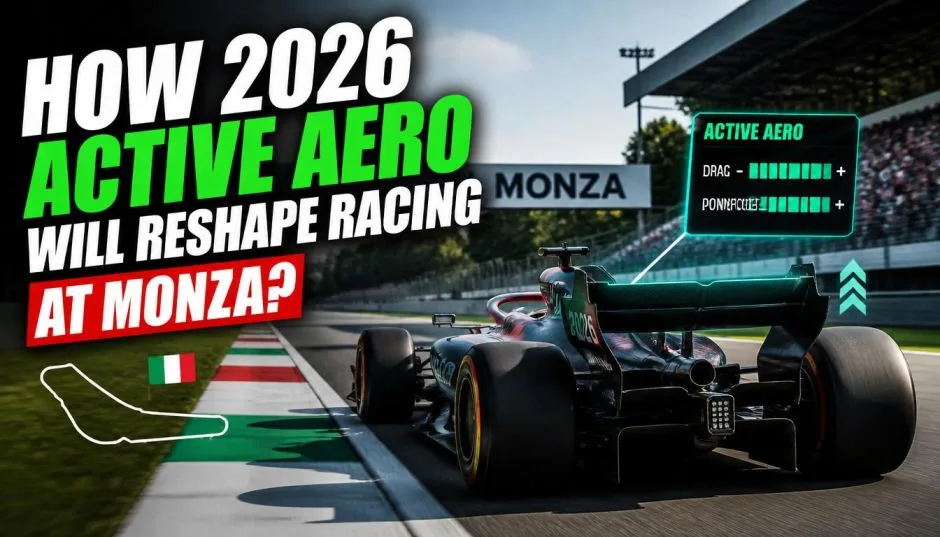
Monza has always been about one thing. Speed. The Temple of Speed demands the lowest drag and the highest straight-line velocity. The 2026 active aero rules change how teams approach that challenge.
I studied the new regulations closely. Here is what active aero actually means for the Italian Grand Prix.
What Active Aero Actually Does?
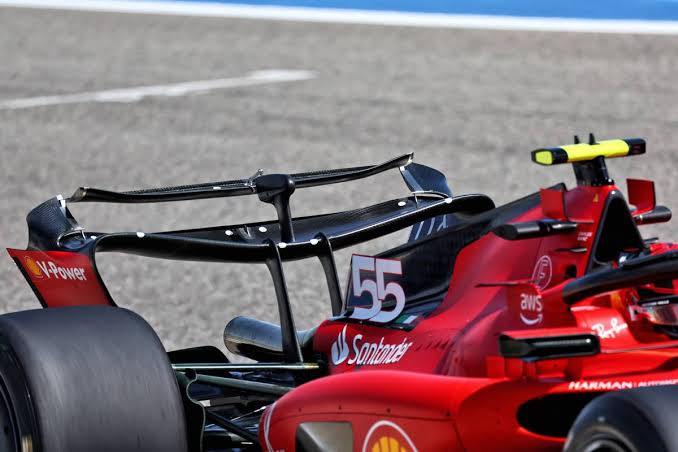
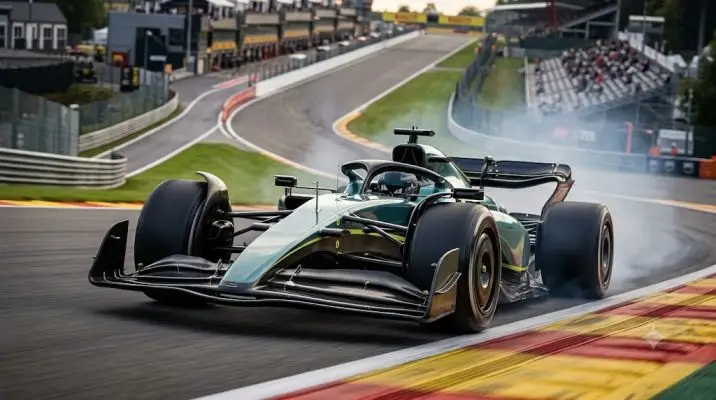
For the first time in F1 history, cars have full-time active aerodynamics in 2026. The front and rear wings adjust their angles dynamically depending on where the car is on track.
Read Also: F1 2026 Replacement Tracks Bahrain Saudi: What You Know So Far?
On straights the flaps move to their "open" position. This is called Straight Mode or X-mode. The wings flatten out, reducing drag and increasing top speed. The FIA targets a 55% drag cut compared to previous cars.
In corners the flaps sit in their default "closed" position. This is Corner Mode or Z-mode. The wings maintain maximum downforce for grip through the turns.
The system is available to every driver on every lap. Unlike the old DRS, you do not need to be within one second of the car ahead . That changes everything.
Why Monza Is Different
Monza is the extreme end of the scale. Drag is the enemy. Teams traditionally trimmed wing angles and chased straight-line speed.
The 2026 active aero system changes the compromise. X-mode gives teams more room to run steeper Z-mode angles. The compromise gets looser but does not go away.
At Monza the strategy is clear. Teams will use low wing angles in Z-mode to minimize base drag. X-mode becomes critical for reducing residual drag on the straights. The car relies more heavily on the floor for balance when X-mode cuts drag.
The circuit's long straights make the active aero zones particularly valuable. Baku has a 2.2 km straight. Monza features multiple long straights where top speed matters. Every kph counts.
Overtake Mode vs Active Aero
The two systems work differently. Many fans confuse them.
Active aero (Straight Mode) is available to every driver on every lap. It reduces drag on straights. You can use it regardless of position.
You Must Also Like: Famous Formula One Street Circuits and Their Challenges
Overtake Mode is the new overtaking aid that replaces DRS. It only activates when you are within one second of the car ahead at the detection point. Instead of opening a wing, it gives you extra electrical power to pass.
The power difference is significant. In standard mode, the MGU-K starts tapering off at 290 km/h. In Overtake Mode, it keeps delivering power up to 355 km/h. That extra grunt matters enormously at Monza.
The Overtaking Revolution
Active aero creates a new racing dynamic. Overtaking becomes less predictable and more strategic.
The old DRS era gave the car behind a simple advantage. Open the wing, gain straight-line speed, make the pass. It was procedural.
The 2026 era is built on mutual optionality. Both drivers have offensive and defensive modes. The car behind can deploy aggressively. The car ahead can answer back with its own defensive electrical power. The pass becomes a negotiation rather than a foregone conclusion.
Energy management is the new battleground. Drivers must think about harvesting, deployment timing, and aero mode switching. A driver who harvests aggressively into a corner might have better traction on exit. One forced to defend earlier might be caught flat-footed.
Williams team boss James Vowles described the shift. "You can almost fill the entire battery in one braking zone, but you can deplete it in one straight. That creates a very different dynamic."
Driver Workload Increases
The new rules demand more from drivers. They must manually toggle active aero zones, manage energy deployment, and decide when to use Overtake Mode.
There are many more active aero zones than DRS zones . Drivers can use them every lap, not just when within one second of a car ahead. The operation is manual.
The FIA has added a "partial active aero" option for wet conditions. Only the front wing opens while the rear wing stays closed. This is similar to how DRS was disabled in the rain.
The Monza Strategy
Teams will develop specific setups for Monza. The active aero system changes the calculation.
Monza still wants low drag. But active aero gives teams more flexibility. They can run steeper wing angles in corners knowing X-mode will shed drag on straights.
The floor becomes more important. With rear wings trimmed for low drag, the floor carries more of the downforce load. Teams must balance X-mode drag reduction with floor-generated grip.
Efficiency matters more. The best setup is not simply the lowest drag. It is the most efficient combination of cornering grip and straight-line speed.
The Final Thoughts
Active aero is a revolution. It replaces DRS with something more complex and more human. Overtaking becomes a skill rather than a guarantee.
Monza will showcase the extremes of the new rules. The long straights make X-mode critical. The high-speed corners demand Z-mode grip. The balance between the two will decide the race.
What excites me is the unpredictability. Energy management and aero timing create opportunities in unexpected places. Little lapses in energy timing could be punished instantly.
What worries me is the complexity. Drivers already manage multiple systems. Adding active aero and energy modes increases cognitive load. Some drivers will master it. Others will struggle.
Monza 2026 will be fascinating. The Temple of Speed meets the new era of F1. I cannot wait.