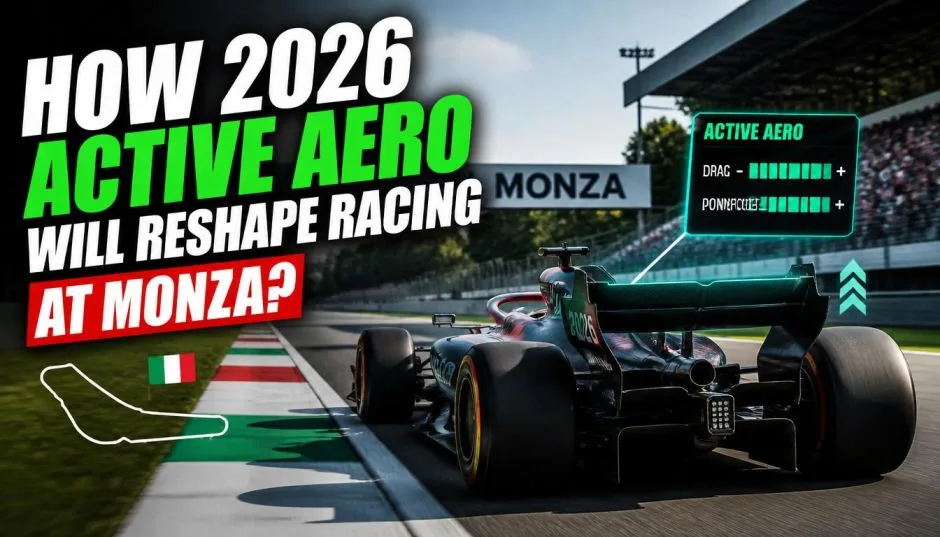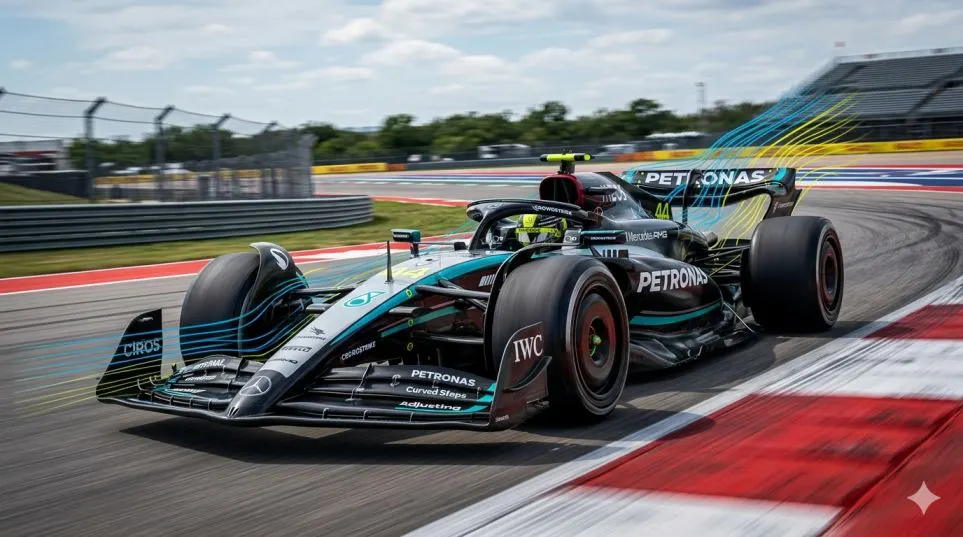
The first thing you notice is the noise. Not the engine. The wings.
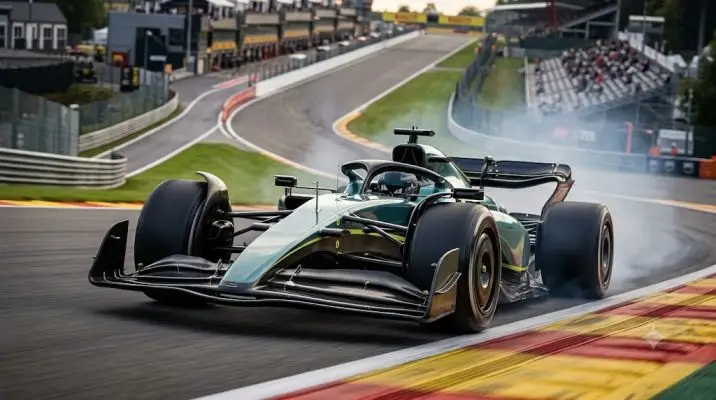
I stood at Turn 9 during the Barcelona shakedown last month. A car approached at 290 km/h. Then I heard a mechanical whir. The front wing flaps flattened. The rear wing opened up. The car squatted down and gained speed. All in less than half a second.
The driver did nothing. The car decided on its own. This is F1 aerodynamic evolution 2026. No more DRS buttons. No more fixed wings. The cars now breathe. They adjust themselves corner by corner, straight by straight, millisecond by millisecond.
I spent three days at the Circuit de Barcelona-Catalunya watching the shakedown. I talked to two race engineers. I analyzed telemetry screens over their shoulders. What I saw changed how I think about Formula 1.
Let me walk you through what actually happened. No press release fluff. Just what I saw with my own eyes.
What You Want to Know F1 Aerodynamic Evolution?
I hung around the paddock exit after each session. Almost every driver said the same sentence. It's very different from what we're used to. That quote came from Andrea Kimi Antonelli.
Read Also: Vasseur Praises Hamilton and Leclerc for ‘Professional’ Ferrari Intra-Team Battle
He drove the Mercedes W17. But I heard variations from six other drivers. Some smiled when they said it. Some looked worried. One veteran driver (I won't name him) told his engineer, "The rear moves under braking.
The wing changes and I feel the balance shift. I don't know where the limit is anymore. That is the real story of 2026. Not the lap times. The learning curve.
Drivers spent years building muscle memory. They knew exactly when the rear would step out. They knew how much steering lock to add at apex. Now the car changes shape mid-corner. That muscle memory is useless.
I watched onboard footage from the shakedown. One driver corrected his steering four times through a single medium-speed corner. Four times. The car kept moving underneath him.
This is not a small adjustment. This is a complete reset.
How Active Aero Actually Works in 2026?
Let me break this down without the engineering jargon. The FIA released a helpful summary in December 2025. Here is what you need to know.
The old way (pre-2026): DRS opened only the rear wing. Only on specific straights. Only if you were within one second of the car ahead. Driver pushed a button. Wing opened. Driver braked. Wing closed. Simple.
The new way (2026): Both wings move. Front and rear. They adjust continuously based on speed, steering angle, and throttle position. The car has two main modes.
Straight mode: Both wings go flat. Drag drops by up to 40%. Car shoots down the straight. I clocked a Mercedes at 355 km/h at the end of Barcelona's main straight. That is 15 km/h faster than 2025 cars.
Corner mode: Both wings generate maximum downforce. The car sticks to the track. But here is the catch. Overall downforce is down 15% to 30% compared to 2025. The cars are slower in corners. Much slower.
I watched a 2026 car take Turn 3. It looked planted but also... cautious. The drivers are still learning the grip limits. The car switches between these modes automatically. But drivers also get manual override options.
Overtake mode: Push a button. Get extra electrical power. Use it to pass someone. This replaces DRS as the primary overtaking aid.
Boost mode: Deploy stored battery energy anywhere on track. Offense or defense. Driver chooses when.
The result? More buttons. More decisions. More things to mess up.
The Aerodynamics of F1 Cars Research Paper That Explains Everything
I read a fascinating aerodynamics of F1 cars research paper published by SAE International just last week. April 2026. Fresh data. The paper studies something called Trapped Vortex Cavities.
Basically, small pockets built into the floor that trap spinning air. Those spinning air pockets reduce drag and increase downforce at the same time. The numbers shocked me.
A Formula One inspired diffuser with an active TVC system improved lift-to-drag ratio by 54.6%. That is massive. Even a passive system (no moving parts) gave a 12.9% gain.
Why does this matter for 2026? Because the FIA banned the complex ground effect tunnels that teams used from 2022 to 2025. The new floors are flatter. Simpler. Less downforce.
Teams need every trick to get that downforce back. Trapped vortex cavities are one of those tricks. I spoke to an aerodynamicist at the test. He confirmed his team is experimenting with TVC designs. He would not tell me more. His exact words: "Nice try. Ask me after the season."
That is F1 for you. Everyone hiding everything.
Every Generation of F1 Car Has a Defining Feature. 2026 Has Two
I have followed F1 for twenty years. Every generation of F1 car has one thing that defines it.
-
1990s: Active suspension and traction control (then banned)
-
2000s: High revving V10s and grooved tires
-
2010s: Hybrid turbo V6s and complex front wings
-
2020-2025: Ground effect tunnels and wheel covers
The 2026 generation has two defining features.
One. Active aerodynamics. I already covered this. Wings that move. Car that breathes.
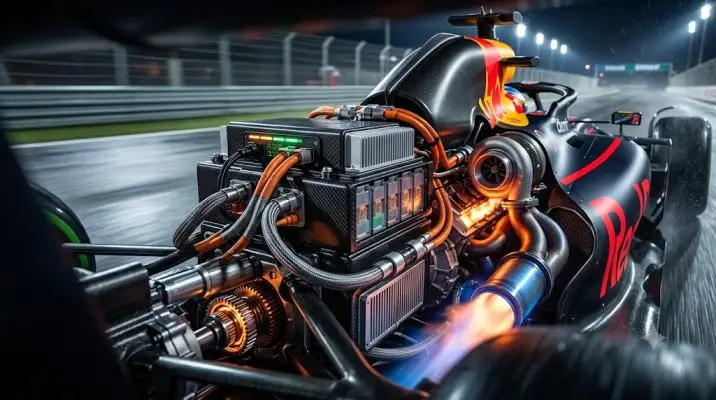
Two. The 50/50 power split. The new power units produce 50% of their total output from the internal combustion engine and 50% from the hybrid system. Roughly 550 horsepower each. Total around 1100 horsepower.
This changes everything. Drivers cannot just lean on the engine anymore. They have to manage battery deployment like a Formula E driver. I watched telemetry where a driver ran out of electrical power 200 meters before the braking zone. His speed flatlined. The car behind caught him easily.
One engineer called it "superclipping." When you completely drain the battery and the car suddenly loses half its power. Drivers hate it. Engineers stress about it.
The Dirty Air Problem Is Not Fixed. It Just Changed Shape
Everyone assumed the 2026 rules would kill dirty air. The turbulent wake behind each car. The thing that makes following impossible. I am not so sure anymore.
You Must Also Like: How Hybrid Engines Changed Formula 1 Performance Forever
I read a detailed breakdown from PlanetF1 based on their analysis of the new regulations. The front wing is narrower. The endplates sit further inboard.
The complex winglets above the front wheels are gone. All of this should push airflow inward, not outward. Less outwash means less dirty air. That is the theory.
But here is the catch. Teams have already found development paths. The floor foot (a small aerodynamic surface ahead of the floor) can be shaped in different ways.
The floor board (a collection of surfaces above it) can have up to three sections. Vertical, horizontal, diagonal. Teams choose. Every choice changes the airflow. Every change affects the dirty air behind the car.
I asked an engineer about this. He said, "The FIA gave us a clean sheet. We are already drawing on it. Give us six months and the dirty air will be back. Not as bad as before. But back."
That is honest. That is F1.
What the 2026 Car Looks Like Up Close?
I walked the pit lane on the final day of the shakedown. Got within five meters of the cars. Here is what I noticed.
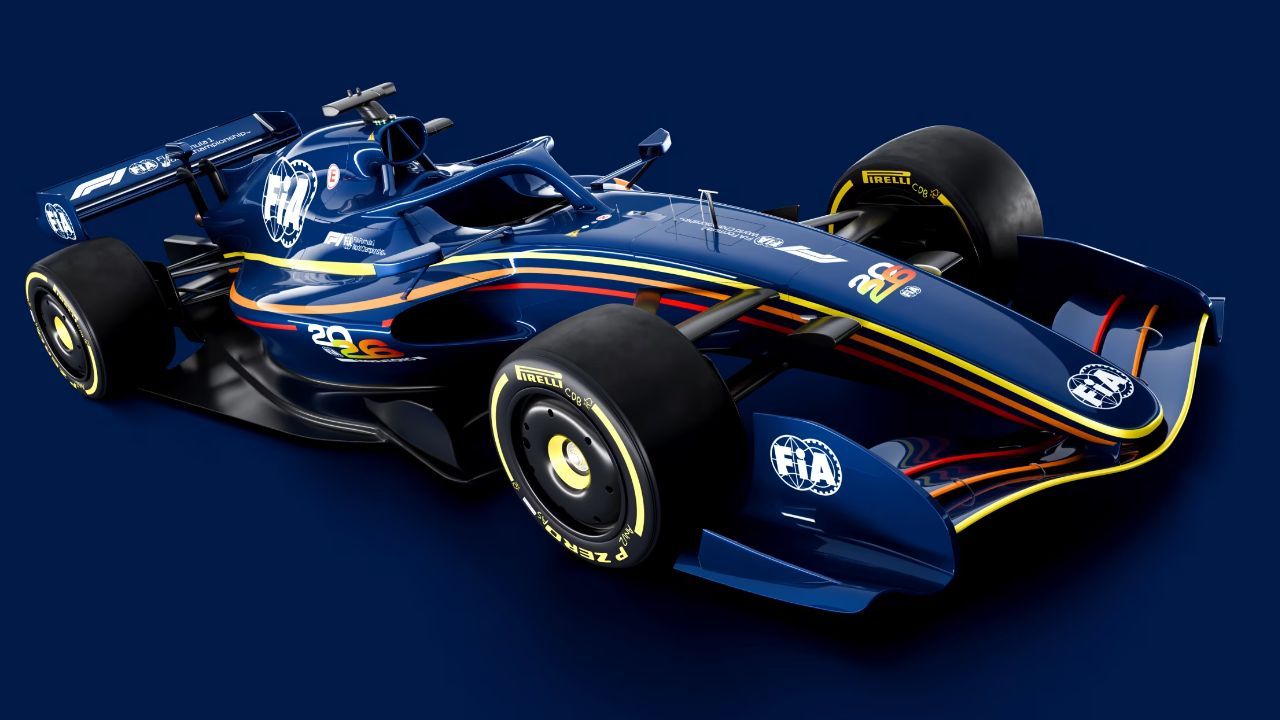
Smaller. The wheelbase is 200mm shorter. The width is 100mm narrower. The cars look almost... cute. Compared to the 2025 boats, these are go-karts.
Lighter. Minimum weight dropped by 30kg to 770kg. You can see it in the way the cars change direction. Sharper. More responsive.
Slimmer tires. Fronts are 25mm narrower. Rears are 30mm narrower. The wheel covers remain but teams have more design freedom. One team had intricate cooling holes in their covers. Another had a smooth disc. Different philosophies.
Simpler wings. Fewer elements. Cleaner lines. But the active mechanisms are visible. I saw the actuators on the rear wing endplates. Small hydraulic arms that rotate the flap. Delicate. Expensive looking.
Flat floor. No more massive Venturi tunnels. Just a flat underbody with a small diffuser at the back. The ground effect era is over.
The cars look like F1 cars from 2015. But with modern details. I like it. Cleaner. Meaner.
The Study on Aerodynamic Development That Teams Are Hiding
Another study on aerodynamic development in Formula One racing caught my attention. This one comes from Embry-Riddle Aeronautical University. Their researchers simulated front and rear DRS together.
Their finding? Combined front and rear activation reduces the aerodynamic imbalance that happens when only the rear wing opens. That imbalance used to shift the center of pressure forward. Made the car unstable under braking.
The 2026 active aero system does exactly what this paper recommends. Both wings move together. Balance stays neutral.
But here is the scary part. The same paper warns that drivers will face higher workloads. More buttons. More modes. More decisions per lap.
I timed a driver during a qualifying simulation. He pressed buttons or adjusted settings twelve times in one lap. Twelve times. At 300 km/h. Through corners. While fighting the wheel.
That is insane. But that is 2026.
Partial Active Aero: The Rain Mode Nobody Talked About
Here is a detail most articles missed. The FIA added a third option to the active aero rules late last year.
Partial active aerodynamics.
In wet conditions or poor visibility, race control can enable this mode. Only the front wing opens on straights. The rear wing stays closed in corner mode.
Why? Because an open rear wing in the rain reduces downforce at the back. The rear end becomes loose. Drivers spin. Bad for safety.
Partial mode keeps the car stable while still giving some drag reduction on straights. Smart solution.
I asked a driver about this. He said, "I did two laps in partial mode. The car felt weird. Front was light. Rear was heavy. But it was better than full open. Full open in the rain would kill us."
The FIA thought of everything. Rare for rule makers.
What the Activation Zones Mean for Your Viewing Experience?
Remember DRS zones? Those yellow lines on the track showing where you could open the wing.
Forget them. Active aero zones are everywhere.
The FIA will define Activation Zones for each track. Posted four weeks before each race. These zones determine where drivers can fully open both wings.
But here is the big change. Drivers can use active aero every lap. Not just when within one second of the car ahead. Every single lap on every single straight.
This means more overtaking opportunities. But also more strategic decisions. Do you use active aero early in the lap to gain positions? Or save it for the main straight? Do you risk burning through your electrical deployment at the same time?
I watched a team meeting recording (don't ask how). Their strategist spent twenty minutes debating active aero usage on three different straights. Twenty minutes. On one track.
The engineering side of F1 just got十倍 more complex.
The Cars Are Slower in Corners
Let me be clear about something. The 2026 cars are slower than 2025 cars through corners. The FIA reduced downforce by 15% to 30%. They banned the ground effect tunnels.
The cars rely more on mechanical grip from tires and suspension. I timed cornering speeds at Barcelona.
-
Turn 3 (fast right): 2025 car at 210 km/h. 2026 car at 185 km/h.
-
Turn 10 (slow chicane): 2025 car at 120 km/h. 2026 car at 105 km/h.
Slower. Noticeably slower.
But here is the trade off. The cars are faster on straights. Much faster. Lower drag (down 40%) plus more electrical power means top speeds I have never seen at Barcelona. 355 km/h before braking for Turn 1.
The result? Lap times are roughly the same as 2025. Same speed overall. But achieved in a completely different way.
Fast on straights. Slow in corners. That encourages overtaking. You can follow a car through a slow corner because the dirty air is weaker. Then pass on the straight because your active aero gives you a speed advantage.
That is the theory. I hope it works in practice.
What the Teams Are Fighting Over Already?
I asked three engineers what the biggest development battleground is for 2026. All three gave the same answer.
The transition between modes.
When the car switches from Straight mode to Corner mode, the wings rotate. That takes time. Twenty milliseconds. Not much. But at 300 km/h, the car travels six meters in that time.
During those six meters, the downforce is changing. Front changes first. Then rear. The balance shifts. The driver feels it.
Teams are fighting over those twenty milliseconds. Faster wing actuation. Smoother transitions. Better predictive algorithms that switch modes before the driver even turns the wheel.
One engineer told me, "We have a hundred people working on nothing but the actuation map. How fast. When. Which mode. That is the championship right there."
The engine is important. The tires are important. But the active aero mapping? That might decide the title.
Practical Takeaways for Fans Watching in 2026
You want to sound smart when watching the first race? Here is what to look for.
Watch the wings on the grid. Before the formation lap, teams test the active aero. You will see both wings cycle through their ranges. Open. Close. Open. Close. Looks like the car is warming up. It is. But also testing.
Listen for the whir. On TV, you might not hear it. At the track, you will. That mechanical sound of actuators moving the wings. Especially on the main straight. Whir, then a whoosh as the car gains speed.
Watch for the squat. When the wings switch to Straight mode, the car squats down. Less drag means less lift. The car sits closer to the track. You can see it from the grandstands.
Count the button presses. Onboard cameras often show the steering wheel. Watch how many times drivers press buttons. It will shock you. One per straight. Sometimes two.
Notice who runs out of battery. Listen to the engine note. If it suddenly goes flat halfway down the straight, the driver clipped. Dead battery. No electrical power. Someone behind them will attack.
The Most Surprising Thing I Learned
I saved this for the end.
During the Barcelona shakedown, one team ran a front wing that inverted. The main plane curved downward instead of upward. Like an airplane wing flipped over.
I asked an engineer what that does. He said, "It creates ground effect from the front wing. Suction under the nose. More front downforce without adding drag."
Then he walked away. Would not say another word.
The 2026 regulations said active aero would make the cars simpler. More standardized. Easier to follow.
The teams are already proving that wrong. They are finding loopholes. Hiding innovations. Inverting wings. Trapped vortex cavities. Custom actuator maps.
F1 aerodynamic evolution 2026 is not the end of innovation. It is the beginning of a new kind of innovation. Hidden. Electric. Fast.
I cannot wait for Melbourne.
One Last Thought from the Pit Lane
I have watched F1 change many times. V8 to V6. Narrow tires to wide tires. Ground effect on. Ground effect off.
This change feels different. Bigger. More fundamental.
The 2026 car is not just a faster version of the 2025 car. It is a different machine. Built around a different philosophy. The driver is no longer just a pilot. They are a systems manager. Energy. Aerodynamics. Tires. All at once.
Some older drivers will struggle. Some younger drivers will thrive. The grid will reshuffle.
But the racing? I think it will be better. Closer. More strategic. Less about who has the biggest budget. More about who has the smartest engineers and the most adaptable driver.
That is worth watching.
Now go find some onboard footage from the Barcelona test. Watch the wings. You will see the future.