EVs are indeed low-maintenance due to fewer moving parts eliminating oil changes and spark plugs but they aren't maintenance-free requiring checks for tires (which wear faster due to weight), brakes (less use, but still need fluid/inspection), cooling systems, cabin filters and essential software updates, with battery health and potential eventual replacement being significant long-term considerations.
This manual will take you through all the factors that affect the cost of maintaining your electric car. Tires, brakes, battery, and software will be considered. You will have a clear idea as to where you can save and where you are to pay attention. This is aimed at ensuring that you become a well-informed and confident EV owner.
Breaking Down EV Maintenance Costs: The Major Savings
Why are they told to be less expensive with EVs? It all comes to the powertrain. Hundreds of moving parts are a gas engine. There are approximately twenty of an electric motor. The lesser the parts the lesser the wearable or breakable things.
This is where the greatest savings will be made:
- No Engine Oil Changes: This is an enormous one. That untidy, regular cost every few months is forgotten.
- No Exhaust System: Mufflers, catalytic converters or tailpipes do not rust or fail.
- Reduced Wear on the Brake Pads: Due to the regenerative braking (the car is decelerated with the help of the motor), the physical brake pads are worn out far less frequently.
- The EVs have cooling systems but they are not as complicated as a radiator setup in a combustion engine.
- None of the Spark Plugs or Air Filters: It is even more likely that you will never purchase this type of gas car product in your EV.
It is simple, which translates to your wallet. As research always indicates the cost of sustaining an EV is much lower in the long run. It is the essence of the pledging EVs are low maintenance.
You may also read :- This One Habit Shortens EV Battery Life
The Reality: EVs Are Low Maintenance, But Not Maintenance Free

This is the phrase that is the most important to remember. Ah, you still possess a complicated engine. Any disregard by it will cause issues and increased bills in the future. The shift in the routine EV service is no longer on the engine bay but on other critical spots.
Think about a bicycle. There is a battery and a motor on an electric bike and this does not mean that you should not take care of the chain, tires, and brakes. Your electric car is similar. The economies saved are huge yet a simple care program cannot be compromised in terms of safety, performance and lifespan.
Where Your EV Maintenance Money Actually Goes?
Let’s get practical. What are you supposed to expect when you do bring your EV in service, or when you are planning your annual budget? The following are the major points that will add to your annual EV maintenance cost.
Tire Rotation and Replacement: The Top Expense
This is usually the most common expenditure to EV owners. Electric vehicles are cumbersome when it comes to the battery pack. They are also known to provide instant torque which is entertaining though has an ability of wearing tires very quick in case you tend to accelerate frequently.
- Tire Rotation: This is to be done frequently as in the case of any car, this will help to wear evenly. It’s a low-cost service.
- Tire replacement: It is possible to change tires a little more frequently than on an equivalent gas car. It is a good idea to invest in purchasing quality tires that would be efficient and lightweight in EVs.
Pro Tip: Megawig check your tire pressure once every month. This makes properly inflated tires safer and last longer and they save your electric vehicle driving range.
Brake System Care: Long Life, But Not Infinite
The regenerative braking is a genius thing. You can also lift the accelerator and the motor turns to decelerate the car and feeds energy in the battery. This implies that you apply less physical friction brakes.
- Brake Fluid: This should still be checked and replaced. It soaks up the moisture with time.
- Brake Pads and Rotors: This is an exceptionally long part it may last- up to 100,000 miles. But they are also able to take away through idleness. During service they will be checked by a good technician on corrosion.
Battery Health: The Heart of the EV
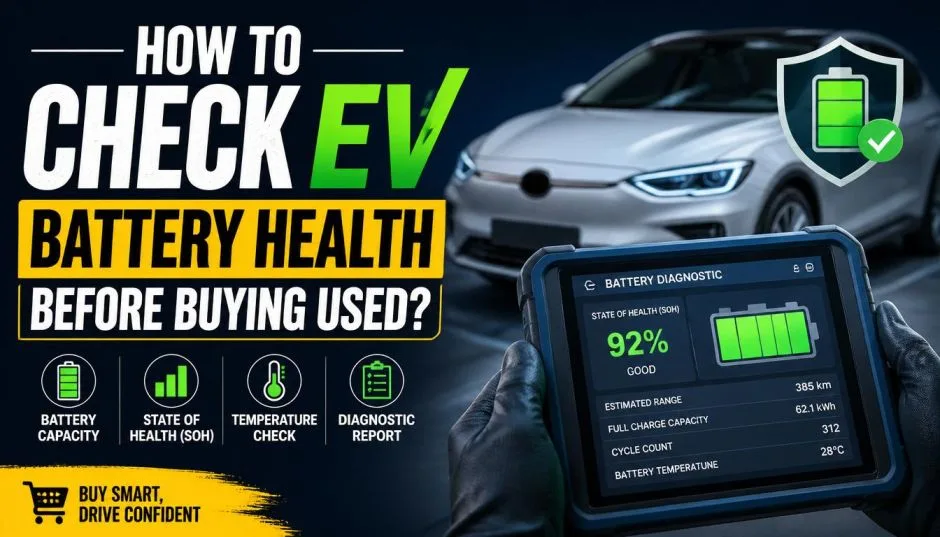
The battery is the part of the car that is the most expensive. It is important to ensure the maintenance of the EV battery to preserve its value over time.
- Software Updates: Manufacturers regularly introduce software that optimizes the management of the battery life and battery efficiency. These are normally performed on-air or when a service visit is carried out.
- Cooling System: It has the battery thermal management system that maintains the pack at optimal temperature. Checking to make sure that this system is operational is a part of maintenance.
- Battery Charging: When using on a daily basis, the battery should be charged 20-80 percent. It is better to charge only to 100 percent and not to 0 percent to prolong battery life and take care of the battery.
Cabin Air Filter Replacement
This is a universal car item. The cabin air filter purifies the air entering your cabin. It is to be changed after one year or as you indicated on your manual. It is a basic low-cost product, which enhances air quality.
Windshield Washer Fluid and Wiper Blades
Never forget the basics! Always top up washer fluid and replace wiper blades when they become streaky. The safety requirements include good visibility.
Software and Diagnostics
The contemporary electric vehicles are the computerized cars on wheel. Regular EV service check-ups can involve checking of error codes and the software of the vehicle. This is necessary to make sure that all systems communicate well and your car has the current features and protection.
The difference is clear. The amount of money saved when servicing EV accumulates year by year. Even though people have different experiences, the trend cannot be ignored
Comparing Costs: EV vs. Gas-Powered Car
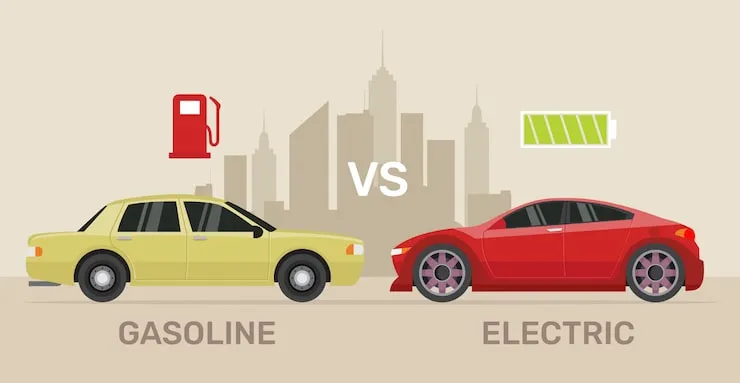
Let’s look at a real example over five years. These are estimated averages based on industry data and owner reports.
| Maintenance Item | Electric Vehicle (Estimated Cost) | Gas-Powered Car (Estimated Cost) |
|---|---|---|
| Oil Changes & Engine Filters | $0 | $500 - $800 |
| Tire Rotation & Replacement | $400 - $800 | $300 - $600 |
| Brake Service (Pads/Fluid) | $100 - $300 | $400 - $800 |
| Exhaust System Repairs | $0 | $200 - $600+ |
| Coolant System Flush | $150 - $300 | $150 - $300 |
| 5-Year Estimated Total | $650 - $1,400 | $1,550 - $3,100+ |
The difference is clear. The savings on EV servicing add up year after year. While individual experiences vary, the trend is undeniable.
Expert Insight on Long-Term Ownership
We interviewed one of the lead technicians of an EV dealership. According to her, the biggest misjudgment of new EV owners is the belief that they do not have any maintenance schedule. In three years they take in the car with original cabin filters and low tire tread. The best thing to do is to follow the EV recommended service intervals as recommended in the manual. It is a smaller and cheaper service but just as safe and reliable as gas car service.
DIY Tips for Lowering Your EV Maintenance Costs
You may actively participate in ensuring low costs.
- Visual Inspections:also take a walk around your car regularly. Check tire wear, fluid leaks (yes, the EVs still have some fluid), and lights.
- Keep clean: When you wash your car and especially the underside during winter, corrosion of brake and suspension parts is prevented.
- Mind Your Driving: Smooth acceleration and good usage of regenerative braking modes will get you the maximum life of tires and brakes.
- Read the Manual: Your owner manual is your greatest friend. It gives you the precise recommendation by the manufacturer and at what time.
Planning for the Future: Battery Longevity
The issue of EV battery change cost is of concern to many individuals. It is a worthy worry yet the fact is quite encouraging. Long battery pack warranties are available on most manufacturers 8 years or 100,000 miles. The current type of battery is specified to serve the life of the car.
Statistics indicate that a EV battery when taken care of can normally have 80-90 percent of its capacity after 10 years of use. This is because you have a diminishing range and hardly fail.
The Final Word: EV maintenance costs
A car with an electric engine alters the field of maintenance. The tirelessly beating of oil change and tune-ups are no longer heard. It is centered on tires, software and battery condition. Knowing these electric vehicle maintenance costs you can make a smart budget and receive one of the greatest perks of EV life wasted time and money on a shop.
Keep this slogan in mind: EVs are low maintenance, rather than maintenance-free. Properly take care of your car, check-up, and see a car that will go through years of quiet, clean and cheap driving. The future is not only electric, it is less complicated and cost-effective.
Common Questions About EV Maintenance Costs
Q: EVs? Are they so cheap to maintain?
A: Yes, overwhelmingly so. Costs are much cheaper because no routine engine and transmission service are carried out.
Q: What would be the costliest thing to repair on EV?
A: Changing the battery pack of high voltages is the most expensive repair when it is necessary. This is however hard to come by in the normal duration of life of the vehicle, and comes with long warranties.
Q: What is the frequency of service of an EV?
A: Intervals of service are typically extended- sometimes 1 year or 100015000 miles. Always stick to the schedule of your particular car.
Q: But do I need to take to the dealership to have service?
A: Dealership is the best when it comes to warranty work and high-voltage system checks. In the case of tires, brakes, and cabin filters, lots of competent independent shops will be of assistance.
Q: Does it make it easier to maintain an EV compared to a gas car?
A: It is easier to do as the amount of fluids and parts to examine is reduced. The total amount of time and finances is usually lower.