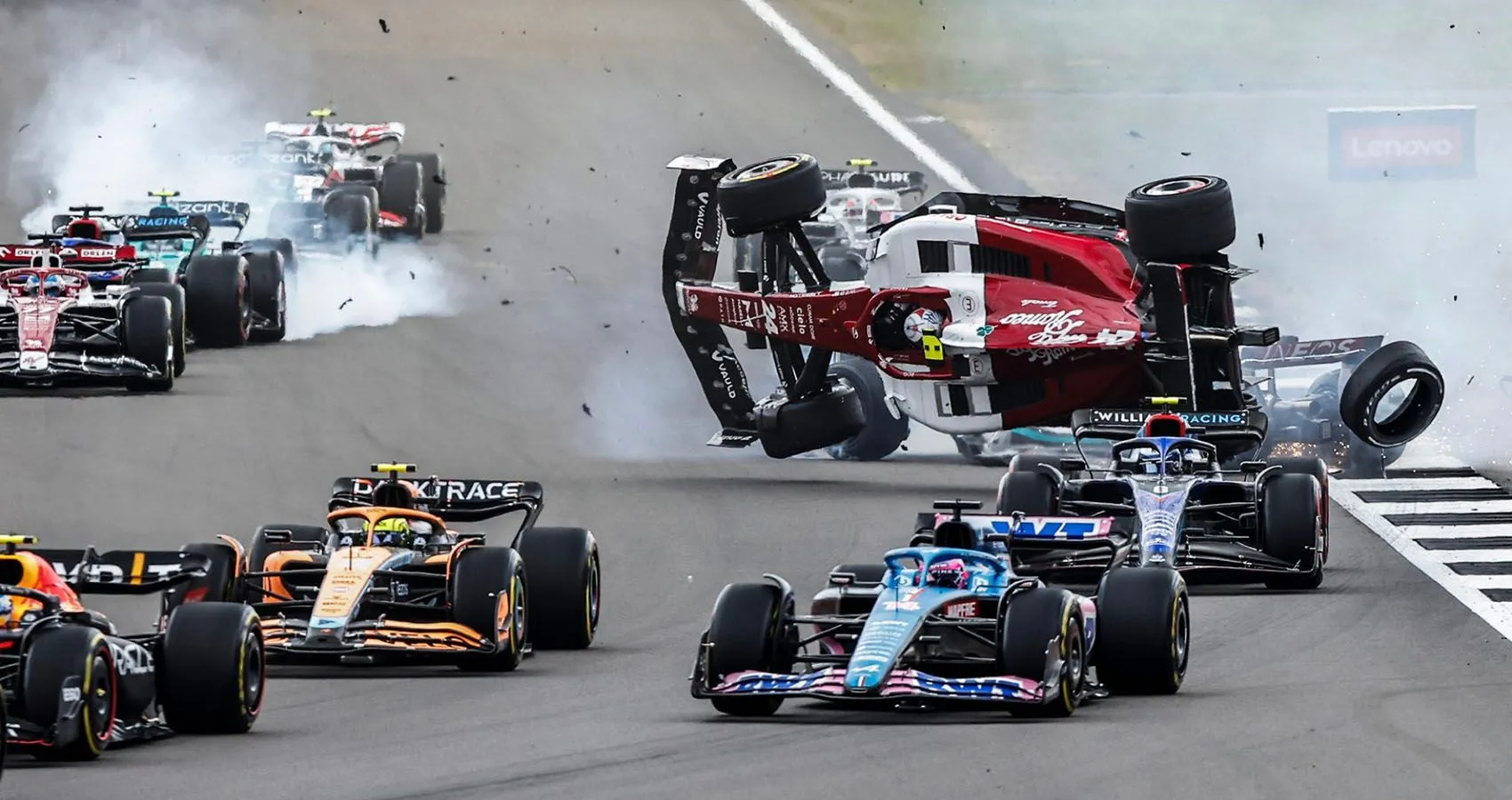
Imagine cars racing at speeds faster than airplanes take off. Now, imagine doing that wheel-to-wheel with other drivers. This is Formula 1, the peak of motorsport. For a long time, this incredible speed came with terrible danger. But the story of F1 racing safety evolution is one of the greatest in all of sports. It’s a story of learning from tragedy, using brilliant engineering, and making a promise to protect the people who race.
This guide will take you through the amazing changes that have saved lives.
The Starting Line: A Dangerous Past
In the early days of Formula 1, safety was not the main focus. The cars were made to be fast, not safe. The tracks were just public roads blocked off for racing.
Drivers had little protection. Their helmets were weak. They did not have seat belts! They thought being thrown from the car in a crash was safer than being trapped in a burning car. The cars themselves could break easily and catch fire.
Tracks had trees, walls, and even houses right next to the racing surface. There were no safety barriers. Sadly, many drivers lost their lives. Each loss was a tragedy. But each one also taught the sport a hard lesson. It forced people to ask: "How can we make this safer?"
The F1 racing safety evolution Guide: Major Changes That Made a Difference
The big shift started in the 1970s and 1980s. People like Professor Sid Watkins, a great doctor, and Jackie Stewart, a champion driver, began shouting for change. They knew the sport had to do better. This was the true start of the modern F1 car safety guide.
1. Building a Safer Cockpit: The Survival Cell
The biggest single innovation is called the "survival cell" or monocoque. This is the driver's cockpit, made from a special, super-strong carbon fiber material.
Think of it as a super-tough bathtub that wraps around the driver. It is designed to not break apart in a huge crash. It protects the driver from impacts from the front, back, sides, and even if the car rolls over. This carbon fiber safety structure is the foundation of all modern F1 safety.
2. The Life-Saver: The Halo Device
Look at a current F1 car. You will see a curved bar above the driver's head. This is the Halo. It is made of titanium and is incredibly strong.
Before the Halo, a flying wheel or a crash into another car could hit the driver’s head directly. The Halo acts like a shield. It has already stopped several serious injuries. Many call it the greatest advancement in driver safety equipment ever made.
3. Suiting Up for Safety: What Drivers Wear
A driver’s suit is like high-tech armor. It is called a firesuit and is made from a material called Nomex. This material can withstand direct flames for over 10 seconds, giving the driver time to escape.
Their gloves, shoes, and underwear are all made from the same fire-resistant material. Even their helmet safety standards are incredible. Modern helmets are so strong they can withstand the impact of a piece of metal flying at 500 kilometers per hour.
Making the Track a Safer Place
Safety isn’t just about the car. Making the racetrack safer for drivers was just as important.
1. Creating Run-Off Areas and Barriers
Old tracks had walls right at the edge. Now, tracks have wide, paved run-off areas. These are like escape zones. If a driver loses control, they can slide onto this smooth pavement and slow down safely, instead of hitting a wall head-on.
When walls are needed, they use smart barriers. TecPro barriers are soft and absorb energy. SAFER barriers (used a lot in the USA) are like steel pillows that cushion a crash.
2. The Vital Role of the Medical Team
Every second counts in a crash. Today, a full F1 medical response team is at every race. There is a medical car that actually starts the race, following the cars for the first lap to be close if needed.
There is always a helicopter ready to fly an injured driver to a top hospital. This system of immediate emergency care in motorsports has saved countless lives.
Learning from Every Incident
A key part of the F1 racing safety evolution is that they never stop learning. After any big crash, the FIA (the sport’s governing body) does a full investigation.
They take the broken car and study it. They look at the data recorders (like a plane's black box). They figure out exactly what happened. Then, they make new rules so that type of crash is less likely to happen again, or its effects are less severe. This process of continuous safety improvement in racing never ends.
FAQs About F1 Safety
Q: Was there one big crash that changed F1 safety the most?
A: Many crashes led to changes. The tragic accidents of drivers like Ayrton Senna and Roland Ratzenberger in 1994 were a huge turning point. It made the whole sport focus on safety like never before.
Q: Are F1 cars safer than regular road cars?
A: In a high-speed racing crash, yes, absolutely. The survival cell, Halo, and harness system are much stronger than anything in a road car. However, road cars have other safety features like airbags for lower-speed crashes that F1 cars don't need.
Q: What is the safest part of a modern F1 car?
A: The survival cell where the driver sits is the safest part. It’s designed to be the last thing to break in a crash.
Q: Do drivers ever get scared because of the danger?
A: Drivers are very aware of the risks, but they trust the safety equipment. As champion Lewis Hamilton once said: "We know we're in the safest cars that have ever been built. That gives you confidence to push to the limit."
Expert Voices on the Safety Journey
The people who lived this change see its importance best.
Professor Sid Watkins (Former F1 Medical Chief) famously said: "The best accident is the one that doesn't happen." He pushed for better barriers, medical care, and car design.
Max Mosley (Former FIA President) was a huge force for change. He used new crash test rules to make car makers build safer vehicles. He once stated: "Safety is a never-ending task. You can never say, 'That's it, we're safe enough.'"
Modern drivers also understand this legacy. Driver Carlos Sainz Jr. said after a big crash: "I am thankful to the FIA and the teams for all the work they have done on safety. Without it, the outcome of my accident could have been very different."
The Finish Line: A Never-Ending Race
The history of F1 safety regulations shows a sport that decided to fight for its drivers' lives. From no seat belts to the Halo, from dangerous roads to high-tech barriers, the journey is amazing.
The work is not over. Engineers are always thinking of the next idea—better helmet designs, stronger materials, smarter track layouts. The F1 racing safety evolution is a race that never has a checkered flag. It is a constant promise: to go faster, yes, but to go smarter and safer first.
It means that today, when we see a dramatic crash, we often see the driver walk away. That is the true victory. It is the victory of learning, of science, and of a sport that decided to protect its heroes.