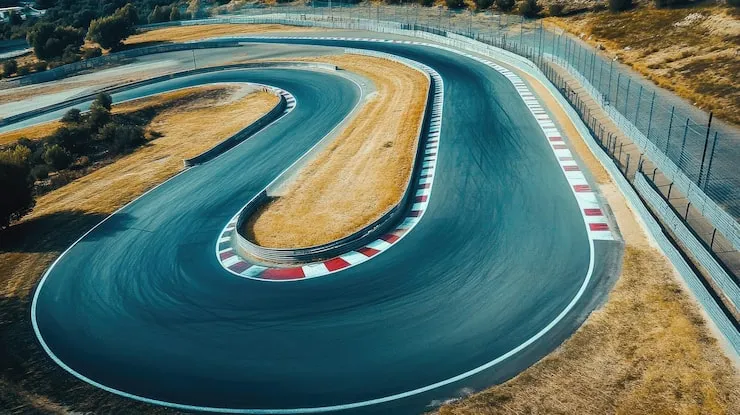
Have you ever watched a race and felt your heart pound just from looking at the track? Some racetracks are famous not just for their speed, but for their extreme danger. These are the legendary high-risk racing circuits.
This guide explores what makes a track high-risk. It looks at the history, the unique challenges, and the brave drivers who take on these legendary courses. Understanding these tracks helps fans appreciate the incredible skill and courage in motorsport.
What Makes a Track High-Risk?
Not every fast track is high-risk. Certain factors combine to create the ultimate challenge. A dangerous racetrack often has a mix of these features.
First, think about the layout. Some tracks are incredibly narrow. This leaves no room for error. Others have blind corners. A driver cannot see what is coming next.
Second, consider the safety features. Modern tracks have wide runoff areas. These are spaces where a car can slow down safely after a mistake. Older or street circuits often lack this protection. A small error can mean hitting a wall.
Third, look at the speed. When cars go very, very fast on a tricky layout, the risk grows. High speeds on narrow roads are a famous recipe for a challenging race course.
Finally, weather can turn any track dangerous. But on a already risky circuit, rain or fog can make it seem almost impossible.
A Guide to High-Risk Racing Circuits: History and Legends
Many of the most hazardous motorsport venues have long histories. They were built in a different time, when safety was not the main priority. These tracks are now legends.
They test a driver's talent like nothing else. Winning on one of these circuits is a huge honor. It means a driver has mastered the ultimate test of focus and bravery.
The Unforgiving Street Circuits
Street circuits are races held on closed public roads. They are some of the most demanding professional race tracks in the world.
Monaco Grand Prix Circuit: This is the most famous street race. The track winds through the tiny city streets of Monte Carlo. It is narrow, twisty, and has almost no runoff. Drivers call it like driving a bicycle in your living room! One famous driver, Nelson Piquet, once said it felt like "riding a bicycle around your bathroom." The barrier walls are so close. A perfect lap here is a work of art.
Baku City Circuit (Azerbaijan): This track has a very long, incredibly fast straight section. Then, it suddenly twists into a tight, ancient city section. Going from 200 mph to a slow corner is a huge shock for the car and driver. It is a track of crazy contrasts, which creates surprise and drama.
The High-Speed Temple: Nürburgring Nordschleife
If one track has a reputation, it is the 'Green Hell'. The Nürburgring Nordschleife in Germany is over 12 miles long. It has more than 150 corners going up and down mountains.
It was built nearly 100 years ago. The track is not used for modern Formula 1 races because it is so risky. But it is still the ultimate test for sports cars. Car companies go there to prove their new models are strong and fast.
Racing legend Jackie Stewart gave the track its "Green Hell" nickname. He said, "To be a complete racing driver, you must race at the Nürburgring. It is the most challenging circuit in the world." Learning every bump and corner is a lifelong task.
The Mountain Course: Isle of Man TT
This is not a traditional circuit. It is a 37-mile public road course on a small island. The Isle of Man TT is for motorcycles, not cars. It is considered the most dangerous race in the world.
Riders reach speeds over 200 mph on small country roads. They pass stone walls, houses, and telephone poles just inches away. The commitment and skill needed are beyond imagination. It is the ultimate example of a high-risk racing circuit.
The Safety Evolution: Respecting the Risk
The history of these extreme motorsports tracks is also a history of safety learning. Tragic accidents in the past forced big changes.
Today, even the most challenging race courses are safer than they were. Safety barriers are better. Helmets and driver suits are like high-tech armor. Cars are designed to protect the driver in a crash.
Organizers now understand the risks better. Races in very wet conditions can be delayed or stopped. This shows that while the challenge is celebrated, safety for drivers and fans is the most important thing.
Why Do Drivers Still Race on High-Risk Tracks?
This is a big question. If a track is known as a dangerous racetrack, why go there?
For the drivers, it is the purest test. Winning on an easy track is one thing. Winning on a track that demands your absolute best is another. It is about respect for history and proving personal skill.
For the fans, it creates unforgettable drama. Every corner holds tension. Seeing drivers conquer these legendary dangerous tracks is thrilling. It creates heroes and legendary stories.
A Guide to High-Risk Racing Circuits for the Future
Will these tracks always exist? Most likely, yes. But they will continue to evolve.
The goal is to keep the famous, exciting challenge but reduce the real danger. New tracks are designed with more runoff areas and better barriers, even if they look very fast and tricky.
The spirit of these hazardous motorsport venues—the need for ultimate focus and skill—will always be at the heart of racing. It is a balance between celebrating the extreme and protecting human life.
FAQs About High-Risk Racing Circuits
Q: What is the most dangerous racetrack in the world today?
A: Most experts agree the Isle of Man TT motorcycle course is the most dangerous. For car racing, circuits like the Nürburgring Nordschleife and Monaco are considered among the most high-risk due to their lack of runoff and extreme layouts.
Q: Are new tracks still built to be high-risk?
A: No, not in the old way. Modern racetrack design focuses on creating a great challenge for the driver while having huge safety areas. The risk comes from competition and speed, not from a lack of safety features like walls close to the track.
Q: Why don't they just make all tracks very safe and wide?
A: If every track was simple and wide, racing would become less about driver skill and more about car engine power. The unique challenge of different tracks—tight street circuits, fast ovals, flowing road courses—is what makes motorsport interesting. It tests all types of driving skill.
Q: Has driver safety improved on these old circuits?
A: Yes, tremendously. While the track layout might be the same, everything around it is better. Safer barriers, medical teams, and faster emergency response all help protect drivers. The cars themselves are also much stronger.
Q: What should a fan remember when watching a race at a high-risk circuit?
A: Appreciate the incredible skill and courage of the drivers. They are not being reckless; they are highly trained athletes performing at the limit on a very difficult stage. The danger is a part of the history and challenge, but safety is always the top priority for the sport.
Expert Opinions on Racing's Greatest Challenges
-
From a Veteran Racing Engineer: "Preparing a car for a place like Monaco or the Nordschleife is a unique puzzle. It's not just about top speed. It's about giving the driver a car they can trust when a wall is inches from their elbow. The setup is everything."
-
From a Motorsport Journalist: "These circuits are the characters in the story of racing. They have personalities. Bathurst is grueling and unforgiving. Monaco is precise and glamorous. Spa is fast and unpredictable. The best drivers are the ones who can adapt to each personality."
-
From a Safety Director: "Our job is to respect the history of these legendary tracks while applying every modern safety lesson we've learned. We can never eliminate all risk, but we work to ensure that the driver's talent is the only thing being tested, not their survival."
In conclusion, high-risk racing circuits are more than just dangerous places. They are the historic, challenging stages where racing legends are made. They remind us that this sport is about mastering incredible machines in the face of a mighty challenge. They demand respect, focus, and immense bravery—from the drivers who race on them, and from the fans who watch in awe.