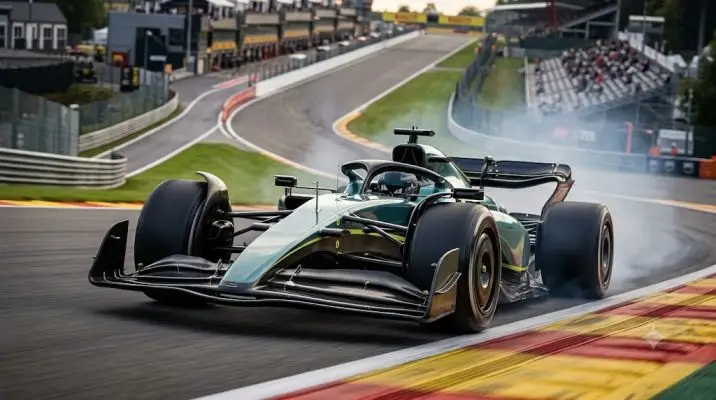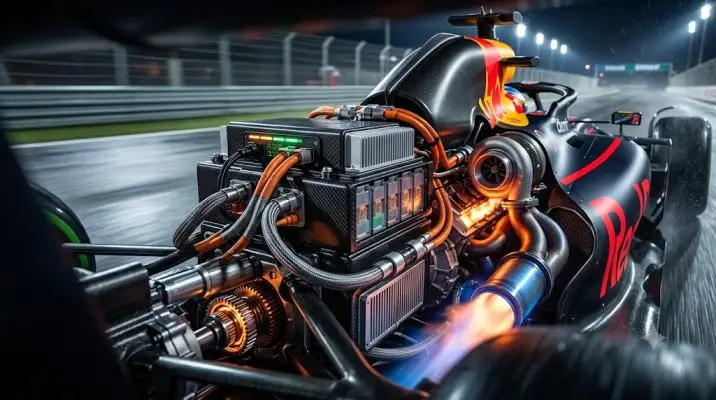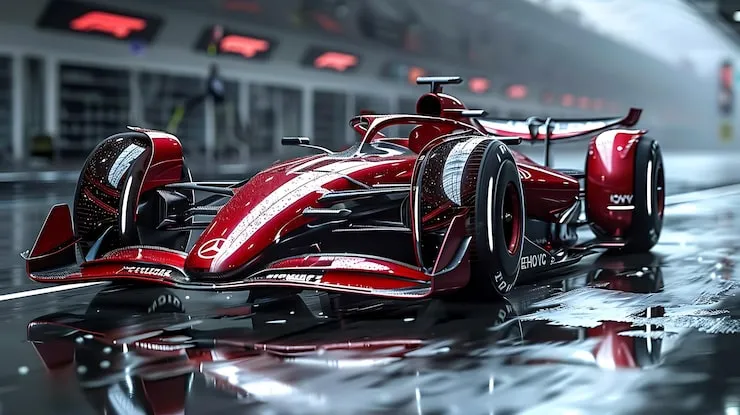
Have you ever wondered why a Formula 1 car looks so wild? Those big wings, curvy bodywork, and weird fins aren’t just for show. They are masterpieces of Formula 1 aerodynamics. This is the science of air in motion, and for F1 teams, it’s the secret to winning races.
Understanding F1 car aerodynamics means understanding how to make a car stick to the track and slice through the air. It’s a constant battle between downforce and drag. This guide will break down the magic behind the speed.
The Formula 1 Aerodynamics Guide: How Air Becomes an Invisible Tool
At its heart, aerodynamics in Formula 1 is about managing two invisible forces: downforce and drag.
-
Downforce is a magical push down on the car. More downforce means more grip. The car can take corners faster without sliding off.
-
Drag is the air’s resistance. It’s like running through water. Too much drag slows the car down on the straights.
The goal is simple: create massive downforce without creating too much drag. It’s a tricky balance. Engineers use computational fluid dynamics (CFD) and wind tunnel testing to find the perfect mix.
Front Wing: The Steering Wheel for Air
The front wing is the first part of the car to hit the air. Its job is critical. It directs the airflow around the tires and sends it to the rest of the car.
A modern front wing has many little flaps and endplates. These parts work together to create vortexes—mini tornadoes of air. These vortices seal the area around the tires, making the air flow smoother down the car’s side. This is called managing dirty air and creating clean airflow.
The Floor and Diffuser: The Car’s Secret Suction Cup
Underneath the car is where a lot of the magic happens. The floor is carefully shaped. At the back, the diffuser is a rising tunnel.
As air speeds under the car, it gets faster. The diffuer helps this air expand and slow down smoothly. This creates a low-pressure area under the car, literally sucking it onto the track. This effect is so powerful it’s a key part of ground effect aerodynamics. New rules in recent years have brought back advanced ground effect designs.
Rear Wing: The Downforce Generator
The rear wing is the most visible aero part. Its main job is to create lots of downforce at the back of the car. It works just like an airplane wing, but flipped upside down.
The DRS (Drag Reduction System) is a clever part of the rear wing. On straight parts of the track, the driver can open a flap. This reduces drag dramatically, allowing for a top speed boost and easier overtaking. It’s a perfect example of the downforce vs. drag trade-off.
Bargeboards and Sidepods: Air Traffic Controllers
Along the sides of the car, you’ll find complex shapes. Bargeboards are like intricate sculptures. Their job is to guide the messy air from the front tires away from the car’s crucial sidepods and floor.
The sidepods house the engine’s radiators. Air is funneled through them to cool the engine. But their shape is also designed to guide air toward the rear of the car, helping the diffuser and rear wing work better.
The Tools of the Trade: Wind Tunnels and Supercomputers
How do teams perfect their designs? They use two main tools.
Wind Tunnel Testing is like a giant hair dryer for a scale model of the car. Engineers watch how smoke flows over the model. They test thousands of tiny changes to find improvements. It’s hands-on and physical.
Computational Fluid Dynamics (CFD) is digital. Supercomputers simulate how virtual air flows over a virtual car. Teams are limited on how much time they can spend in wind tunnels and on CFD. This keeps costs down and makes the competition fair.
The Driver’s Experience: Feeling the Air
You can’t see aerodynamics, but drivers feel them every second. In a fast corner, high downforce makes the car feel planted and secure.
But driving behind another car is tough. The leading car creates a turbulent wake of dirty air. This “washout” ruins the downforce of the following car. It makes the front end feel light and nervous. That’s why new rules aim to create cars that can follow closely, leading to better racing.
“The feeling when the downforce ‘bites’ in a high-speed corner is incredible,” says a former F1 performance engineer. “But the moment you hit turbulent air, that grip just vanishes. The driver is fighting the physics of the air as much as the steering wheel.”
Aerodynamics and Race Strategy: More Than Just Speed
Aerodynamics affects every part of a race weekend.
-
Qualifying Setup: Teams run maximum downforce levels for qualifying to be fastest over one lap.
-
Race Setup: For the race, they might reduce wing levels for better straight-line speed and less tire wear.
-
Overtaking: The DRS system is a direct tool to help overcome aerodynamic disadvantages when following another car.
-
Tire Wear: A car with stable, clean airflow will be gentler on its tires, a huge strategic advantage.
FAQs: Your Formula 1 Aerodynamics Questions Answered
Q: Why do F1 cars spark?
A: Those brilliant sparks are from titanium skid blocks under the car. With so much downforce pushing the car down, it runs very low to the ground. On bumps, it scrapes the track, creating sparks! It’s a visual proof of the aerodynamic forces at work.
Q: What is ‘dirty air’ and why is it bad?
A: Dirty air is the messy, turbulent wake left by a car. It’s like trying to drive through a whirlwind. For the car behind, this chaotic air reduces the effectiveness of its wings and floor, cutting its downforce by over 35%. It makes the car slippery and hard to control.
Q: How do wet weather tires work with aerodynamics?
A: In the rain, teams use taller, grooved tires to push water away. But aerodynamics are still vital! The wings still create downforce to push the tires into the wet track for grip. However, teams run less wing to reduce spray and improve visibility for the driver behind.
Q: What’s the biggest aerodynamic challenge today?
A: The biggest challenge is the downforce vs. drag compromise. But a close second is designing cars that can race well together. The current ground effect rules focus on generating downforce from the floor, which creates less dirty air for the car behind, promoting closer racing.
The Future: Smarter and Sustainable Aerodynamics
The future of F1 aero technology is exciting. As hybrid engines become more important, managing engine cooling with smaller sidepods is a big challenge. The 2026 rules promise even more focus on active aerodynamics—parts that can change shape automatically for the perfect balance on every part of the track.
The goal remains: to use the invisible force of air to create the fastest, safest, and most exciting racing machines on the planet. The science of Formula 1 aerodynamics is what turns a powerful car into a flying, cornering masterpiece. It’s the art of making air do the hard work.