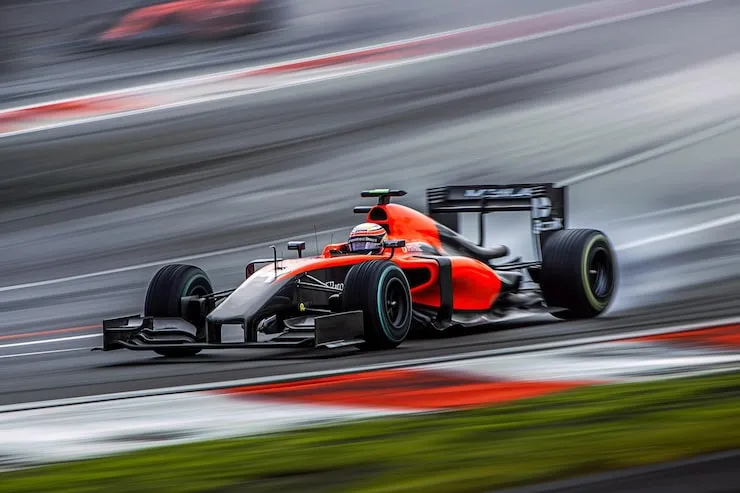
Have you ever wondered what it costs to protect a Formula 1 team from disaster? It's not just about fast cars and fancy pit stops. Behind the scenes, a complex web of financial protection keeps these teams racing. A huge part of that is insurance. Let’s take a friendly look at what influences F1 team insurance premiums 2024 and why it's such a big deal.
We'll explore the risky business of motorsport finance and see where the money really goes.
The Starting Line: Why F1 Insurance is a Different Beast
Formula 1 is not like insuring a family car. The speeds are over 200 mph. The technology is secret and worth millions. The people involved are world-famous athletes. This means the risks are sky-high.
Insurance premiums for a top team can be one of their largest yearly expenses outside of car development and salaries. Every single piece of the operation needs protection. From the championship-winning chassis to a mechanic's tools, it all adds up.
Think of it as a giant safety net. If a car is totaled in a crash, insurance helps the team build a new one. If a driver gets hurt, certain policies can help. This financial safety allows teams to push the limits, which is what we love to see on Sunday!
Your Inside Look: The F1 Team Financial Breakdown Guide
To understand insurance, you first need to see the bigger money picture. Let's open the books with a simple F1 team financial breakdown guide.
Mapping the Money: Where Does the Budget Go?
An F1 team’s budget is like a giant pie. The biggest slices go to:
-
Making and improving the car.
-
Paying hundreds of skilled team members.
-
Traveling to 24 races across the globe.
-
And yes, paying for comprehensive risk management and insurance liability coverage.
Insurance is the slice that protects all the other slices. If something terrible happens, that insurance slice ensures the team can keep baking pies (or building cars) next season.
The Premium Puzzle: Calculating the Cost of Risk
How do insurers decide the price, or premium, for a team? They act like super-smart detectives. They look at a team's entire history and future plans. They ask:
-
How many crashes did this team have last year?
-
How experienced are their drivers?
-
How safely do they transport their gear?
-
What is the total asset value protection needed for their headquarters and gear?
The answers to these questions directly shape the F1 team insurance premiums 2024. A safer team with a clean record often gets a better rate.
Key Factors Driving 2024 Insurance Costs
This year, several specific things are influencing the price of protection in the F1 paddock.
The Value of Speed: Protecting Cutting-Edge Technology
Modern F1 cars are packed with proprietary engineering data and advanced hybrid power units. These are not just car parts; they are secrets worth more than gold. Insuring this high-value motorsport equipment is very expensive. If a secret part is damaged in a crash, the financial loss is huge, both in replacement cost and lost competitive edge.
The Human Element: Driver Contracts and Health
Drivers are the stars. Their contracts are worth millions. Specialized insurance exists to protect the team’s investment if a driver cannot race. Factors like a driver's age, experience, and even recent performance can tweak the insurance premium calculation. Keeping drivers safe is the best way to manage this cost.
A World Tour: Logistics and Global Coverage
An F1 team is a traveling circus. They move tons of gear by air, sea, and land to places like Las Vegas, Monaco, and Singapore. Every journey risks damage or theft. International freight insurance for this logistics and transport risk is a major part of the bill. More races mean more travel, which can mean higher costs.
How Teams Work to Lower Their Premiums
Teams don’t just pay the bill. They actively work to reduce their annual insurance expenditure.
Building a Safety Culture: More Than Just a Helmet
The best way to lower costs is to prove you're a safe bet. Teams invest millions in safety innovation, from better car designs to stronger track barriers. They run endless training for their pit crews. This risk mitigation strategy shows insurers they are serious. A safer team often gets reduced liability costs.
The Art of the Deal: Specialized Insurance Brokers
Teams don't buy insurance online. They hire expert motorsport insurance brokers. These experts know how to build the perfect custom insurance package for each team. They negotiate with insurance companies to get the best coverage terms and pricing. A good broker is worth their weight in gold for a team.
Expert Opinions: Voices from the Industry
"The relationship between on-track performance and financial stability has never been tighter," says Sarah Chen, a veteran motorsport finance analyst. "A team's risk profile, which directly affects their premiums, is now a key performance indicator discussed in boardrooms. Effective financial risk management is as crucial as aerodynamic downforce."
Michael Rossi, a specialist insurance underwriter for elite sports, adds: "When underwriting an F1 team, we're not just looking at crash stats. We examine their entire operation, from their factory's fire suppression systems to their data cybersecurity. The most professional teams in all areas often receive the most favorable terms."
Frequently Asked Questions (FAQs)
Q1: What is the single most expensive thing an F1 team insures?
A: It’s usually the collective intellectual property and data—the secret designs and engineering knowledge. The physical car is very valuable, but the ideas that built it are even more precious and harder to replace.
Q2: Do all F1 teams pay the same insurance rate?
A: Not at all. A top team with a stable driver lineup, a modern factory, and a recent safe record will likely pay a different rate than a newer team. It's personalized, just like car insurance for different drivers.
Q3: Does a big crash during a race instantly make insurance more expensive?
A: It can influence the cost. One crash might not change things overnight, but a pattern of accidents will definitely be noticed when the policy is renewed. Insurers look at long-term trends.
Q4: Who pays if a driver gets injured in a testing accident?
A: This is covered by a mix of policies. The team will have employer's liability insurance. The driver will also have their own personal accident coverage. It’s a layered system to make sure everyone is protected.
The Checkered Flag: Insurance as a Silent Partner
So, the next time you see an F1 car zoom by, remember there’s an invisible layer of financial engineering working just as hard as the mechanical engineering. F1 team insurance premiums 2024 reflect the incredible scale, risk, and ambition of this sport.
Managing these costs through smart financial planning for racing teams and a top-tier safety culture is what allows teams to focus on the main goal: racing to win. It’s a high-speed balance of risk and reward, where the right protection lets talent and technology truly shine.