Have you ever wondered how a Formula 1 car is made? These machines are like rockets on wheels. They are the result of thousands of hours of work by brilliant engineers. But creating such a fantastic vehicle comes with a huge bill. Let’s explore the fascinating topic of F1 car development cost.
Understanding the financial investment in Formula 1 is key to seeing why these teams are so special. It’s not just about building one car. It’s a never-ending race to make it faster, smarter, and better than the competition. Every bolt, wing, and computer chip has a story and a price.
Why is F1 Car Development So Expensive?
The quest for speed has no finish line. Teams spend millions to find just a tenth of a second per lap. This constant push for improvement is the main driver of Formula 1 team budgets. They are always researching, designing, and testing new ideas.
This money goes into several key areas:
-
Advanced Materials: Building with carbon fiber and special metals.
-
Wind Tunnel Testing: Shaping the perfect car body for slicing through air.
-
Super-Smart Computers: Using powerful software to run millions of design simulations.
-
Highly Skilled People: Paying the best engineers, designers, and mechanics in the world.
An F1 Car Development Cost Guide: Breaking Down the Big Numbers
To truly grasp the expense of building a Formula 1 car, we need to look at the major pieces. Think of it like a very high-tech, speed-focused puzzle.
The Heart of the Car: Power Unit Price Tag
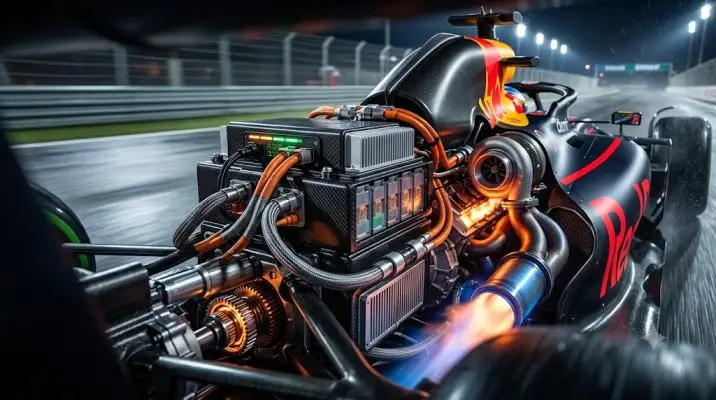
The engine, or "power unit," is the most complex part. Making these hybrid engines is a massive project. The cost of F1 power units involves hundreds of experts working for years. A single power unit can cost millions to develop and build. Teams can only use a few each season, so reliability is as important as power.
Creating the Perfect Shape: Aerodynamics and Wind Tunnel Spending
If you want to understand F1 car development cost, look at the car's shape. Every curve is designed to control airflow. This science is called aerodynamics. Teams spend a huge part of their annual F1 team expenditure on aerodynamics research and development.
They test shapes in wind tunnels and with computer programs. This wind tunnel and CFD analysis spending helps them find the best design without building it first. It’s like a digital race before the real one.
The Invisible Brain: Software and Simulation Budget
Modern F1 cars are like computers on wheels. A giant part of the budget for F1 technology goes into software. Engineers create a digital version of the car, called a "simulation." They can test new parts in this virtual world. This investment in F1 simulation tools saves time and money. It allows teams to try wild ideas without breaking anything real.
A Season-Long Mission: The Price of Being Competitive
An F1 car development cost is not a one-time payment. The work never stops. Between races, teams are already working on parts for next month and even next year.
The Race to Upgrade: In-Season Development Expenses
The car that starts the season in March is very different by November. Teams bring upgrades and updates to almost every race. This constant in-season development expenses include designing, making, and shipping new parts around the world. It’s a logistical and financial challenge.
When Things Go Wrong: Crash Damage and Repair Costs
Racing is risky. A single crash can cost hundreds of thousands of dollars. Crash damage and repair costs are a surprising part of a team's budget. A broken front wing or suspension piece, made of special carbon fiber, is very expensive to replace. This is why drivers are told to "bring the car home."
Rules of the Game: How Regulations Control Spending
You might think teams can spend as much as they want. But that’s not true anymore. To make racing fair and sustainable, F1 has a cost cap for F1 teams.
What is the F1 Budget Cap?
This is a set limit on how much a team can spend in a year to develop and run their car. The financial regulations in Formula 1 aim to level the playing field. It stops the richest teams from outspending everyone else by a huge amount. Teams must be smart and creative with their money.
Smart Spending: Innovation Within a Budget
The cost cap forces teams to prioritize. They must ask: "Will this new part make us fast enough to be worth its price?" This leads to efficient F1 engineering strategies. The smartest team, not always the richest, can find an advantage.
Beyond the Car: The Hidden Costs of an F1 Team
The F1 car development cost is just one part of the story. Running a full team requires even more investment.
People Power: Salaries for Engineers and Specialists
The biggest cost for most teams is people. Paying salaries for F1 engineers, designers, strategists, and mechanics takes a large part of the budget. These are the best minds in motorsport, and their expertise is invaluable.
Travel and Logistics: The Global Circus
Formula 1 races on five continents. Moving two cars, tons of equipment, and over 100 people to 23 different countries is a giant operation. The logistics and operational costs are enormous. It involves dozens of flights, huge trucks, and shipping containers that become pop-up garages.
FAQs: Your Questions About F1 Costs Answered
Q: What is the total cost to develop a new F1 car from scratch?
A: It's hard to give one number because development never really stops. However, creating the initial design and first prototype for a new season can easily reach hundreds of millions of dollars when you include all the research, materials, and people.
Q: How does the cost cap work?
A: The cost cap sets a maximum amount teams can spend on car performance each year. For 2024, that limit is around $135 million. It covers most things related to making the car go fast, but excludes some big items like driver salaries and marketing.
Q: Which part of an F1 car is the most expensive to develop?
A: The power unit (engine) is typically the single most expensive component due to its incredible complexity. However, the ongoing development of the car's aerodynamics consumes the largest portion of the yearly budget.
Q: Why can't smaller teams just spend more to catch up?
A: Before the cost cap, they tried, but the top teams would simply spend even more. Now, with the budget limit, all teams have a similar financial playing field. This forces everyone to be smarter and more innovative with their resources.
Expert Insight: The Voice of Experience
To understand the true scale, it helps to hear from those inside the sport. As one former team technical director once shared:
“The challenge is relentless. You are designing, manufacturing, and validating new parts every single week. The financial investment in Formula 1 is not just about having a great idea. It’s about having the resources to test it, build it, get it to the track, and then start all over again the next day. The cost of innovation in F1 is the heartbeat of the competition.”
This quote shows that F1 car development cost is really the cost of competitive racing. It’s the price of passion, innovation, and the desire to be the best in the world.
The Final Lap: More Than Just Money
So, the next time you see an F1 car zooming by, remember it represents much more than speed. It is a moving masterpiece of technology and human skill. The F1 car development cost reflects the immense effort to push the boundaries of physics.
It’s a story of financial investment in Formula 1 that fuels a global sport. This spending leads to new inventions that sometimes make their way into our everyday cars. The expense of building a Formula 1 car is high, but for the teams and fans, the pursuit of victory is priceless. The race to build the fastest machine is a never-ending, and incredibly expensive, journey.