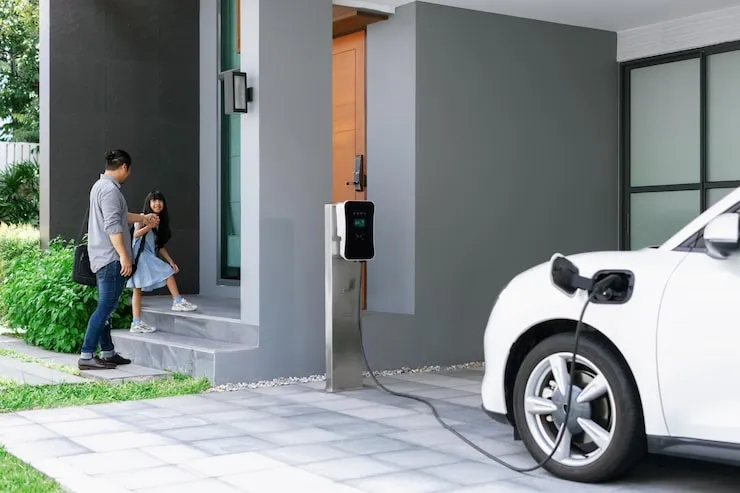
The true cost of charging an EV at home involves electricity rates (around $0.16-$0.18/kWh on average but varies by location and time-of-use plans). Your car's efficiency (miles per kWh) and potential installation costs for a Level 2 charger (around $2,000 before incentives). Expect to pay roughly $50-$70 monthly for typical driving, or about 5-6 cents per mile, significantly less than public charging or gasoline, with significant savings possible by charging overnight during off-peak hours.
This isn’t just guesswork. By looking at your electricity bill, your car’s battery size, and your driving habits, you can find your true cost. It’s simpler than it sounds! Let’s plug in and learn.
What Determines Your Home Charging Bill?
The price to charge an electric car at your house isn’t one fixed number. It depends on a few key things. Understanding these is like knowing the recipe for your total cost.
Your Local Electricity Rates: The Biggest Piece of the Puzzle
This is the most important factor. Your electricity rate per kWh (kilowatt-hour) is what the power company charges you. It’s on your monthly bill. In the U.S., the average rate is about 16 cents per kWh. But this changes a lot!
- Some states have average rates as low as 10 cents per kWh.
- Other states might be closer to 30 cents per kWh.
- This is why answers vary. Cheap home EV charging starts with knowing your rate.
Your EV’s Battery Size and Efficiency
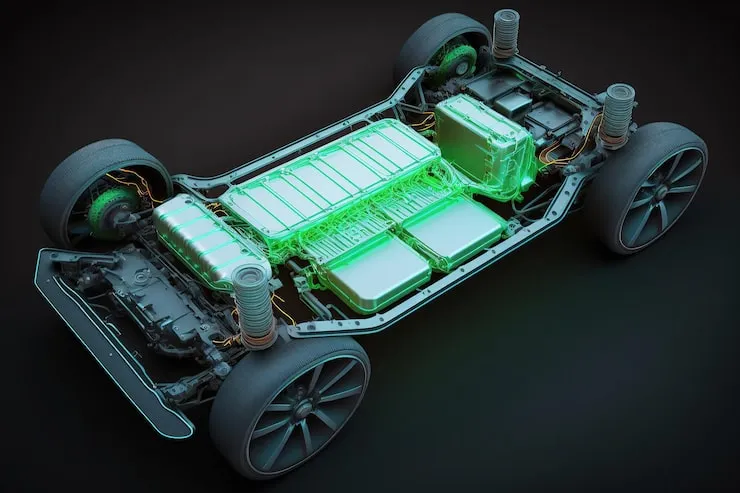
Think of this like your car’s "gas tank" and "miles per gallon." Battery size is measured in kWh. A car with a 40 kWh battery is a smaller "tank" than one with a 100 kWh battery. You also need to know miles per kWh. An efficient EV might go 4 miles for every 1 kWh of electricity. A less efficient one might only go 2.5 miles. This EV energy consumption is a huge deal for cost.
Your Daily Driving Distance
How far do you drive each day? If you drive 30 miles, you’ll use less electricity than someone who drives 100 miles. Your daily commute mileage directly impacts your monthly EV electricity cost.
You may also read :- Why Some Electric Cars Cost More to Insure?
How to Calculate Your Own Charging Cost?
Let’s do the math together. It’s easy! The formula is simple:
(Battery Size in kWh) x (Electricity Rate per kWh) = Total Charging Cost
But you don’t always charge from empty to full. A more useful way is the cost per mile.
- Find your car’s efficiency (e.g., 3.5 miles per kWh).
- Find your electricity rate (e.g., $0.16 per kWh).
- Divide the rate by the efficiency: $0.16 / 3.5 miles = $0.046 per mile.
That’s less than 5 cents a mile! Now, multiply that by your monthly miles. For 1,000 miles: 1,000 x $0.046 = $46 per month.
Real-World Cost Examples
Let’s see this with two popular EVs at the U.S. average electricity rate of $0.16/kWh.
Example 1: A Compact EV
- Car: A popular model with a 60 kWh battery.
- Efficiency: About 4 miles per kWh.
- Cost for a Full Charge: 60 kWh x $0.16 = $9.60.
- Range: About 240 miles.
- Cost per Mile: $0.16 / 4 = $0.04.
Example 2: A Long-Range EV SUV
- Car: A larger SUV with an 85 kWh battery.
- Efficiency: About 3 miles per kWh.
- Cost for a Full Charge: 85 kWh x $0.16 = $13.60.
- Range: About 255 miles.
- Cost per Mile: $0.16 / 3 = $0.053.
Compare that to a gas car getting 30 MPG with gas at $3.50/gallon. Its cost per mile is about $0.117! The EV saves a lot.
Level 1 vs. Level 2 Charging: Does It Change the Cost?
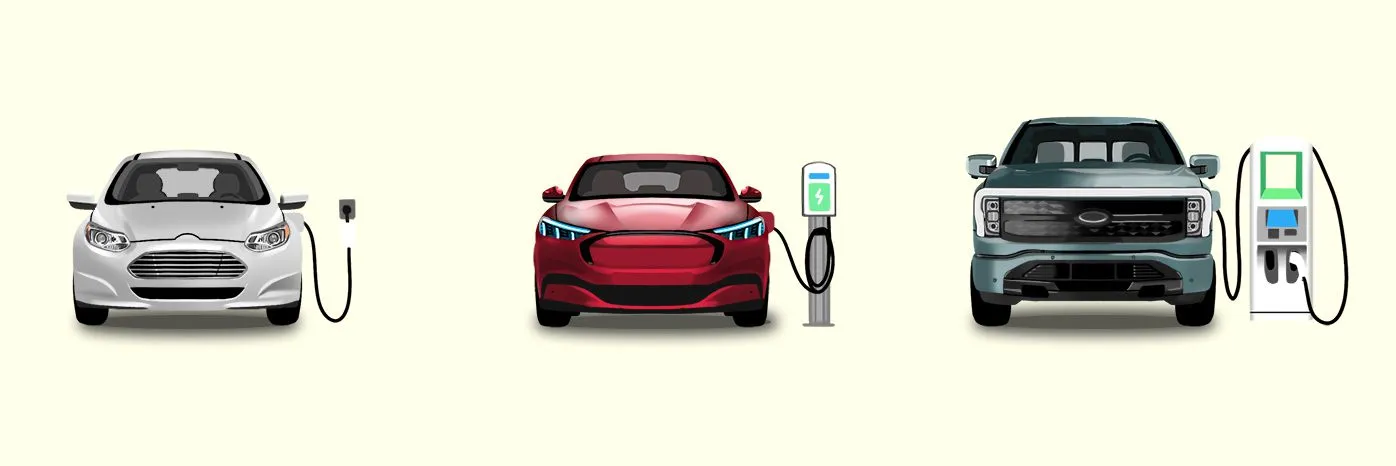
This is a common question. The short answer: not really, but it matters for convenience.
- Level 1 Charging (120V outlet): This uses a standard plug. It’s very slow but doesn’t need special equipment. The electricity cost for home charging is the same per kWh, but it’s so slow you might not get a full charge overnight.
- Level 2 Charging (240V outlet): This is what most people install. It’s much faster. You need a home EV charging station installed. The equipment and installation cost money upfront ($500-$2,000), but the electricity cost is identical. It just delivers it faster.
While the per-kWh energy cost is identical, a Level 2 charger provides crucial convenience and can allow you to take full advantage of lower, off-peak electricity rates if your utility offers them, says a veteran automotive electrification specialist.
How to Save Even More on Home Charging?
You can make charging an electric car at home even cheaper with a few smart steps.
Take Advantage of Time-of-Use (TOU) Rates
Many power companies offer TOU electricity plans. This means electricity costs less at night when people use less power. You can set your car to charge after 9 PM and before 6 AM. Your cost of charging an EV at home could drop by 50% or more during those "off-peak" hours!
Consider Solar Panels
This is the ultimate way to control costs. With home solar panel savings, you can use the sun’s power to charge your car. Your electricity rate effectively becomes zero for the power you produce yourself. It’s like having your own personal gas station on the roof.
Regular Habits Matter
Just like with a gas car, smooth driving preserves energy. Also, pre-conditioning your car while it’s still plugged in on a cold morning uses wall power instead of battery power, saving your range.
Common Myths About Home EV Charging Costs
Let’s clear up some misunderstandings.
- Myth 1: "Charging an EV will double my electric bill." Not true. For the average driver, it’s more like adding the electricity use of a new refrigerator or central air conditioner.
- Myth 2: "The charger itself uses expensive electricity." The EVSE (charging equipment) just delivers power. The cost is in the electricity going through it, not the box on your wall.
- Myth 3: "It’s always cheaper than gas." Almost always, but if you have extremely high electricity rates and very low gas prices, the gap narrows. It’s still worth calculating.
The Big Picture: Total Cost of Ownership
When we talk about EV versus gas car expenses, fuel is just one part. Electric vehicles have far fewer moving parts. This means much lower maintenance costs for EVs. No oil changes, no spark plugs, less brake wear. When you add up the annual EV charging cost plus the maintenance savings, the total is usually much lower than for a gasoline vehicle.
Final Thoughts
Understanding the cost of charging an EV at home is empowering. It moves from a vague worry to a simple, calculable part of your budget. For the vast majority of drivers, switching to an electric vehicle and charging it overnight leads to significant savings on "fuel" and maintenance.
The key is to calculate your personal EV charging expense using your car’s info and your own electricity rate. Once you see that number—that surprisingly small number—it all makes sense. Welcome to a simpler, quieter, and more affordable way to drive.
FAQs
How much does it cost to charge an electric car at home monthly?
For an average driver going 1,000 miles a month, with average U.S. electricity rates, the cost is typically between $35 and $55 per month. This is often 50-70% less than the cost of gas for the same distance.
Is it cheaper to charge at home or at a public station?
Home charging is almost always cheaper. Public DC fast chargers are more expensive, similar to the cost of gasoline in some cases. They are for road trips, not daily use. The real savings of home EV charging come from your home's lower electricity rates.
Do I need a special electric panel to charge at home?
Most homes can handle a Level 2 home charger installation. An electrician will check your panel to see if you have space for a new 240-volt circuit. Some older homes may need a panel upgrade, which adds to the upfront cost.
What is the upfront cost to set up home charging?
The main cost is installing the Level 2 charging equipment. This includes the charger unit ($400-$700) and professional installation ($500-$1,500+, depending on wiring distance). Look for local or utility EV charger installation rebates that can cut this cost.